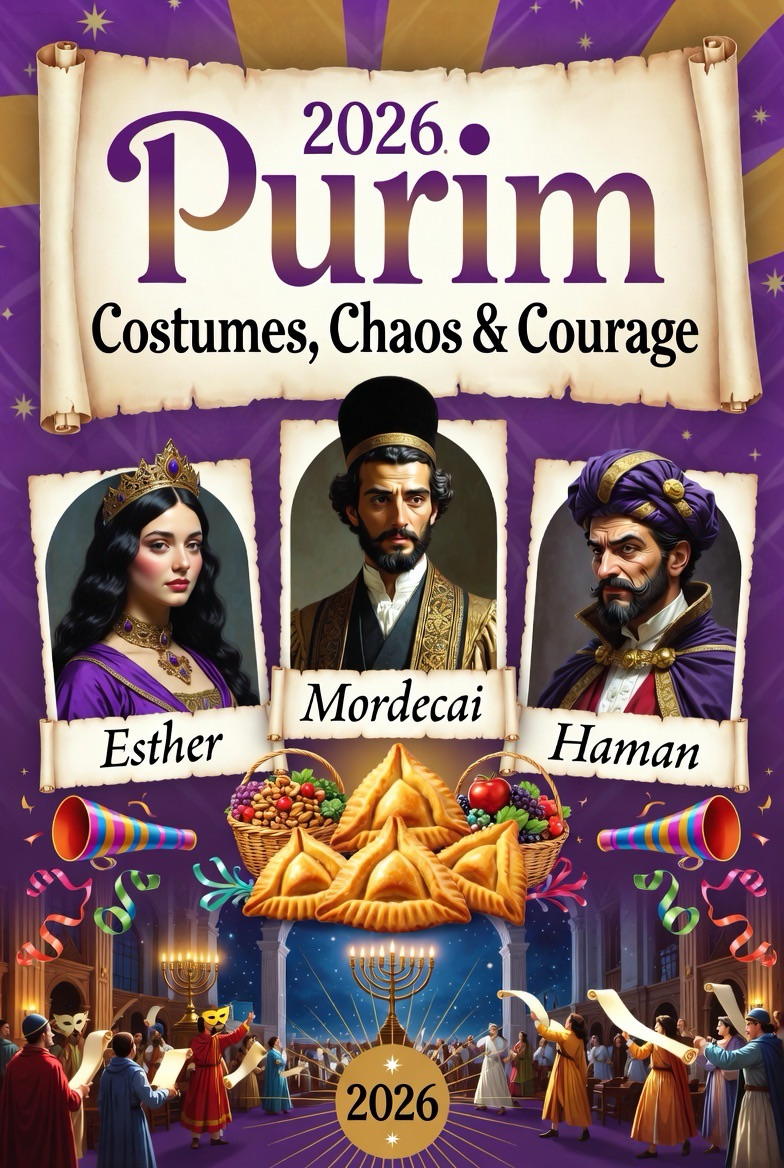
Every spring, just as the world begins to bloom, Jewish communities explode into color, noise, and pure, unfiltered joy. Purim 2026 arrives at sundown on Monday, March 2, and spills across Tuesday, March 3—with Jerusalem partying an extra day on Wednesday. This is no quiet reflection; it is a full-throttle festival of survival, sass, and sweet revenge, where ancient history feels thrillingly alive and the message couldn’t be more urgent: evil plots can be overturned, hidden heroes can rise, and laughter is the ultimate act of defiance.

The Pulse-Pounding Tale: Esther’s Daring Gamble in a Persian Power Play
At the center of Purim sits one of the Bible’s most cinematic stories—the Book of Esther, or Megillah—read aloud in synagogues with theatrical flair. Picture the opulent Persian Empire under King Ahasuerus (better known as Xerxes). After his queen Vashti refuses to parade before his drunken feast, the king holds a lavish beauty contest and crowns the secret Jewish orphan Esther as his new bride. Her wise cousin Mordecai urges her to keep her identity hidden.
Enter the villain everyone loves to hate: Haman, the king’s ruthless second-in-command. When Mordecai refuses to bow, Haman doesn’t settle for personal payback. He manipulates the king into signing a decree to wipe out every Jew in the 127 provinces—on a date chosen by casting lots, or purim. Panic ripples through the Jewish communities.
Mordecai rushes to Esther: the fate of her people rests on her. Approaching the king uninvited could mean instant death, yet Esther fasts, prays, and hosts two banquets. At the second, she dramatically reveals her Jewish identity and exposes Haman’s genocidal scheme. The king, stunned and furious, orders Haman hanged on the very gallows the villain had built for Mordecai. The decree is reversed, the Jews are saved, and the 14th of Adar becomes a day of feasting, gift-giving, and unbridled rejoicing.
What makes the story electric is its subtlety—no splitting seas, no burning bushes, no mention of God’s name at all. Yet the “coincidences” line up with breathtaking precision: the right queen at the right moment, the sleepless king who flips through royal records at exactly the right hour, the gallows already built. Purim celebrates the hidden hand of providence working through brave human choices, proving that miracles sometimes wear disguises.
Four Fiery Commandments That Spark Purim’s Signature Sparkle
The Talmud boils the celebration down to four unforgettable mitzvot, each one designed to spread joy like wildfire.
First comes the public reading of the Megillah—twice: once at night, once in the morning. Congregations turn into lively theaters where every mention of Haman triggers an explosion of groggers, stamping feet, booing, and cheering. Children (and many adults) arrive in full costume—Esthers in glittering gowns, Mordecais in royal robes, even modern twists featuring superheroes and pop icons—turning the service into the happiest, loudest event of the year.
Second, everyone sends mishloach manot—at least two ready-to-eat treats to at least one friend. In practice, this means beautifully packaged baskets overflowing with hamantaschen, chocolate, fruit, nuts, and little bottles of wine arrive at doorsteps all day long, strengthening friendships and filling neighborhoods with delicious anticipation.
Third, matanot la’evyonim—generous gifts to those in need. At least two donations ensure that no one is left out of the joy. Many communities collect funds on Purim morning so money reaches recipients before the festive meal begins.
Fourth, the seudah—a lavish, wine-infused feast. The Talmud famously suggests drinking until you can’t distinguish “Cursed is Haman” from “Blessed is Mordecai.” (Most people interpret this with joyful moderation—safety and dignity always win.) Add raucous Purim spiels (humorous skits that roast everything from the rabbi to current events), street parades, and of course, the star of the dessert table: triangular hamantaschen cookies stuffed with poppy seeds, apricot, chocolate, or raspberry. Their shape? Legend says they mimic Haman’s hat, his pockets, or even his ears—whatever the story, the taste is pure happiness.
Why This Ancient Festival Feels Fiercely Relevant in 2026
In a world still wrestling with rising hatred, political uncertainty, and the constant pressure of modern life, Purim hits different. Esther could have stayed safe in the palace, silent and protected. Instead she stepped forward with the immortal line, “If I perish, I perish,” and changed history. The holiday reminds us that courage often looks ordinary until the moment it matters most.
It also teaches that joy itself is resistance. When darkness looms, Purim says: dress up, make noise, give gifts, eat well, and laugh louder than your fears. Antisemitism didn’t begin or end with Haman, but neither did Jewish resilience. Every year the story repeats: the plot unravels, good prevails, and the community emerges stronger, sweeter, and ready to party.
Your Personal Invitation: Step Into Purim’s Magic This March
You don’t need to be Jewish to join the fun. Find a local synagogue Megillah reading—most are open, family-friendly, and delightfully rowdy. Bake a batch of hamantaschen (search for foolproof recipes and experiment with fillings). Drop off a small care package to a neighbor with a bright “Chag Purim Sameach!” note. Donate to a charity fighting prejudice or helping those in need. Even just reading the story of Esther aloud with friends turns an ordinary evening into something memorable.
Purim refuses to be solemn. It demands laughter, generosity, and the bold belief that hidden good can still triumph. This March 2–3, 2026, let Esther’s courage, Mordecai’s wisdom, and the entire community’s joy remind you: sometimes the greatest victories arrive in costume, carrying baskets of cookies, ready to turn your world upside down—in the very best way.
Chag Purim Sameach! May your 2026 overflow with sweet surprises, hidden blessings, and the kind of laughter that echoes long after the noisemakers are put away.

Purim vs. Halloween: Costumes, Candy, and Chaos – But Worlds Apart in Spirit and Story
When it comes to holidays that unleash creativity through costumes, sweets, and a touch of wild abandon, Purim and Halloween often get lumped together as festive twins. Both transform ordinary folks into superheroes, villains, or mythical creatures for a night (or day) of revelry. Yet dig a little deeper, and these celebrations reveal stark contrasts in origins, meanings, and traditions. As we approach Purim 2026 on March 2–3, let’s unpack how this ancient Jewish triumph stacks up against Halloween’s spooky secular spectacle on October 31. Spoiler: they’re more like distant cousins than siblings—one rooted in religious redemption, the other in pagan harvest rites turned commercial candy-fest.
Origins: Biblical Drama Meets Celtic Shadows – From Survival Saga to Supernatural Spooks
Purim’s story is straight out of a biblical thriller, drawn from the Book of Esther in the Hebrew Bible. Set in ancient Persia around the 5th century BCE, it recounts how Queen Esther and her cousin Mordecai thwarted Haman’s genocidal plot against the Jews. The holiday’s name comes from “purim,” meaning “lots,” referring to the dice Haman rolled to pick the extermination date. Celebrated since around 400 BCE, Purim emphasizes themes of hidden miracles, courage, and reversal of fortune—no overt divine intervention, just perfectly timed human bravery.
Halloween, by contrast, traces its roots to the ancient Celtic festival of Samhain (pronounced “Sow-in”), marking the end of the harvest season and the start of winter around 2,000 years ago in what is now Ireland, the UK, and northern France. Celts believed the veil between the living and the dead thinned on October 31, allowing spirits to roam. When Christianity spread, it morphed into All Hallows’ Eve, the night before All Saints’ Day on November 1. Over centuries, especially in America via Irish immigrants in the 19th century, it shed much of its religious ties to become a secular bash focused on ghosts, ghouls, and good-natured frights.
Key difference? Purim is deeply tied to Jewish scripture and history, with no supernatural elements beyond providence. Halloween leans into the eerie and otherworldly, blending pagan folklore with Christian influences before going fully mainstream and commercial.
Timing and Atmosphere: Springtime Joy Explosion vs. Autumnal Eerie Vibes
Purim bursts forth in late winter or early spring on the 14th of Adar in the Hebrew calendar—shifting annually but always around February or March (like March 2–3 in 2026). It’s a daylight-dominated affair, kicking off at sundown but peaking with morning readings and afternoon feasts under brighter skies. The vibe? Uplifting, triumphant, and downright rowdy, with an emphasis on community bonding and laughter as resistance against adversity.
Halloween locks in on October 31 every year, embracing the darkening days of autumn. It’s a nighttime extravaganza, with dusk-to-dawn parties, haunted houses, and trick-or-treating under streetlights or full moons. The atmosphere skews spooky and thrilling, playing on fears of the unknown—think jack-o’-lanterns warding off evil spirits, or costumes channeling monsters and witches for a controlled dose of terror.
While both holidays thrive on excitement, Purim radiates optimism and renewal (fitting its spring slot), whereas Halloween revels in the macabre and mysterious, aligning with fall’s themes of harvest endings and encroaching winter darkness.
Costumes and Customs: Heroic Disguises with a Purpose vs. Frightful Fun for All
Ah, the costumes—where the similarities shine brightest. On Purim, dressing up honors the story’s “hidden” elements: Esther concealed her identity, and miracles unfolded incognito. Kids and adults alike parade as biblical figures, modern icons, or anything whimsical, turning synagogues into colorful carnivals. But it’s not just play; costumes tie into the mitzvot (commandments), like drowning out Haman’s name with noisemakers during Megillah readings.
Halloween costumes run the gamut from cute to creepy—princesses, zombies, superheroes, or pop-culture nods—often chosen for scares or laughs. The tradition stems from Celts disguising themselves to blend with wandering spirits, evolving into today’s elaborate outfits for parties or door-to-door candy hunts.
Beyond dress-up, Purim mandates specific acts: sending mishloach manot (food gift baskets) to friends, giving matanot la’evyonim (charity to the poor), feasting with wine, and baking hamantaschen (triangular cookies symbolizing Haman’s hat or ears). It’s communal and giving-focused, with a religious core.
Halloween’s customs center on trick-or-treating (kids collecting candy house-to-house), carving pumpkins into glowing faces, and hosting bonfires or haunted attractions. Sweets abound—candy corn, chocolate bars—but without the structured giving or charitable emphasis. It’s more individualistic and entertainment-driven, with modern twists like adult pub crawls or horror movie marathons.
Similar sweets factor? Absolutely—hamantaschen vs. Halloween candy hauls. But Purim’s treats come with storytelling and sharing, while Halloween’s are all about the thrill of the grab.
Deeper Meanings: Triumph Over Evil Through Unity vs. Embracing the Unknown with Playful Fear
At its core, Purim is about Jewish resilience: standing against hatred, as embodied by Esther’s risk-it-all heroism. It’s a reminder that even in exile, good can prevail through cleverness and community. The drinking and merriment? A Talmudic nod to blurring lines between curses and blessings, celebrating life’s ironies without losing sight of the sacred.
Halloween, in its modern form, is lighter on profundity—more a cultural release valve for exploring darkness safely. It nods to mortality and the supernatural but prioritizes fun over philosophy. For many, it’s about creativity, nostalgia, and seasonal escapism, with little religious obligation (though some Christians observe it tied to saints’ days).
Both foster joy amid potential peril—Purim flips a near-genocide into jubilation; Halloween turns fears into festivities. Yet Purim carries a moral weight, urging charity and remembrance, while Halloween leans secular, commercial, and thrill-seeking.
Why the Comparison Matters in 2026: Lessons from Two Wild Holidays
In a divided world, comparing Purim and Halloween highlights how holidays evolve while preserving core essences. Purim offers inspiration for courage and giving, especially resonant amid ongoing global challenges. Halloween provides a universal outlet for imagination and harmless scares, uniting diverse crowds in costume-clad camaraderie.
If you’re in St. Petersburg, Florida, like many enjoying the sunny vibes this February, why not blend the best? Host a themed party mixing hamantaschen with pumpkin treats, or explore local events for both. Ultimately, these holidays prove that dressing up and indulging can be more than fun—they’re timeless ways to confront (and conquer) life’s shadows, one costume at a time.
Whether you’re team Purim’s redemptive roar or Halloween’s haunted howl, both remind us: a little chaos, cleverly channeled, makes the ordinary extraordinary. Chag Purim Sameach—or Happy Halloween—whenever the spirit strikes!

Leave a Reply