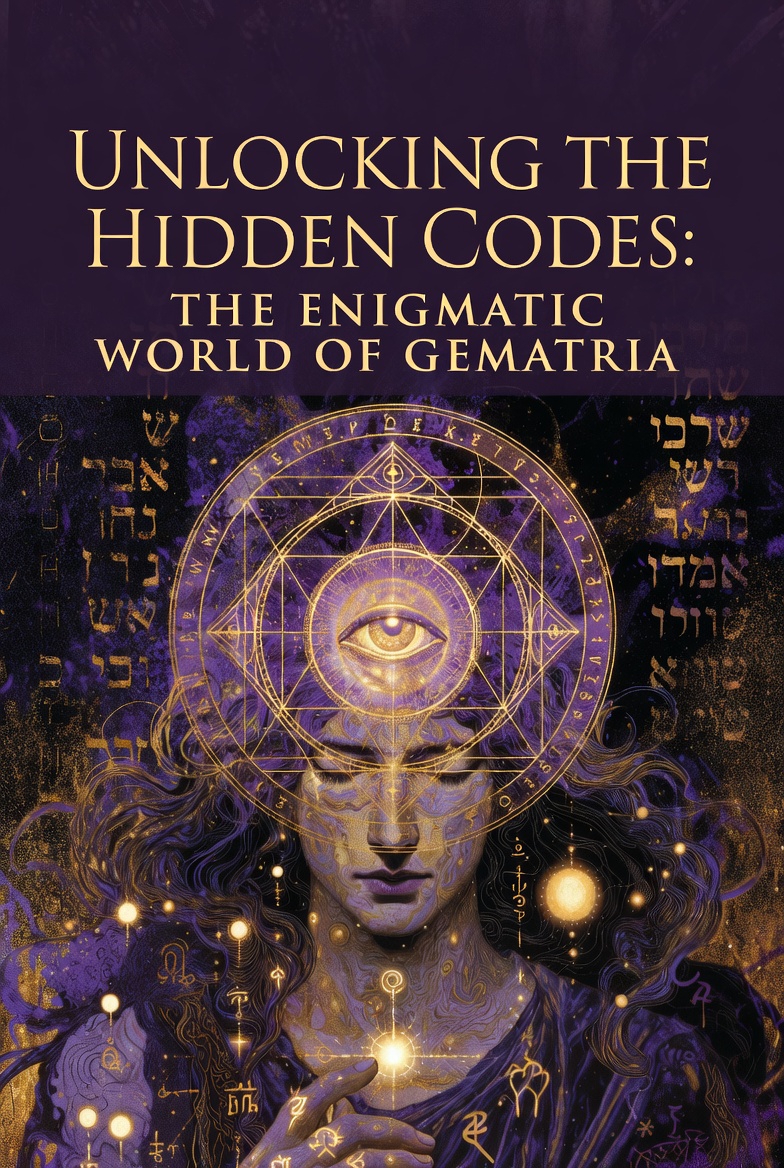
In a world obsessed with data and algorithms, ancient practices like gematria remind us that numbers have long held mystical power. Imagine a system where every letter in a word carries a numerical value, revealing hidden connections between seemingly unrelated concepts. Gematria, an esoteric tradition rooted in Jewish mysticism, does just that—transforming language into a mathematical puzzle that has intrigued scholars, mystics, and conspiracy theorists for centuries. Whether you’re a history buff, a spiritual seeker, or simply curious about the unseen patterns in our universe, this deep dive into gematria will illuminate its origins, mechanics, and enduring legacy. Let’s decode the secrets together.

From Ancient Alphabets to Divine Secrets: The Origins of Gematria
Gematria’s story begins in the misty annals of antiquity, where alphabets weren’t just tools for communication but gateways to the divine. Emerging from the Hebrew tradition around the 2nd century BCE, gematria draws from the fact that ancient alphabets like Hebrew and Greek served dual purposes: as letters and as numerals. In Hebrew, for instance, the first letter Aleph represents 1, Bet stands for 2, and so on up to Tav at 400. This numerical assignment wasn’t arbitrary; it reflected a worldview where the cosmos was ordered by numbers, echoing Pythagorean philosophies that “all is number.”
Historians trace gematria’s formal development to the Jewish mystical text known as the Sefer Yetzirah, or “Book of Creation,” composed between the 3rd and 6th centuries CE. This enigmatic work posits that God created the universe through 32 paths of wisdom—10 Sephirot (emanations) and the 22 letters of the Hebrew alphabet. Gematria became a key interpretive tool in Kabbalah, the mystical branch of Judaism, allowing practitioners to uncover hidden meanings in sacred texts like the Torah. But its influence didn’t stop there; similar systems appeared in Greek isopsephy and even Islamic abjad numerals, suggesting a cross-cultural fascination with numerical linguistics.
What makes gematria’s origins so captivating is its blend of spirituality and intellect. Rabbis and scholars used it not for fortune-telling, but to deepen understanding of scripture. For example, in the Talmud, gematria explains why certain biblical phrases equate numerically, revealing moral or prophetic insights. This ancient practice set the stage for a tradition that would evolve, adapt, and sometimes veer into controversy over the millennia.

Cracking the Code: How Gematria Transforms Words into Numbers
At its core, gematria is deceptively simple—yet profoundly complex in application. The process involves assigning numerical values to letters and summing them to find a word’s “gematria value.” In standard Hebrew gematria (Mispar Hechrechi), Aleph is 1, Bet 2, Gimel 3, and so forth. For words with letters beyond the first ten, values jump: Yod is 10, Kaf 20, up to Kuf at 100, Resh 200, Shin 300, and Tav 400.
But gematria isn’t one-size-fits-all. Variations add layers of intrigue:
- Mispar Gadol (Large Value): Extends values for final forms of letters, like final Mem at 600 instead of 40.
- Mispar Katan (Small Value): Reduces numbers by summing digits until a single digit remains, akin to numerology.
- Atbash Cipher: A substitution method where the first letter swaps with the last, creating mirrored equivalents.
- Temurah: Permutes letters to form new words, often combined with gematria for deeper analysis.
Practitioners then compare these values across words or phrases. If two unrelated terms share the same number, it suggests a mystical link—perhaps a prophecy, a moral lesson, or a cosmic harmony. Take the Hebrew word for “love” (ahavah), which equals 13, the same as “one” (echad). This equivalence underscores the Kabbalistic idea that true love unites individuals into oneness.
Modern enthusiasts have digitized gematria with calculators and apps, making it accessible to anyone. Yet, mastering it requires more than math; it’s an art of interpretation, where context and intuition play starring roles. Whether analyzing biblical verses or personal names, gematria invites us to see language as a living code, waiting to be unlocked.

Sacred Numbers and Historical Revelations: Iconic Examples of Gematria in Action
Gematria’s true allure shines through its historical applications, where numbers have sparked revelations and debates. In the Bible, the number 666—famously the “number of the beast” in Revelation—has been dissected via Greek isopsephy to identify figures like Emperor Nero, whose name sums to 666. This example illustrates how gematria bridges religious texts and real-world events, fueling apocalyptic interpretations.
Jewish lore abounds with gems: The phrase “chai” (life) equals 18, inspiring charitable donations in multiples of 18 for good luck. In the Torah, the word for “serpent” (nachash) shares 358 with “Messiah” (mashiach), hinting at redemptive themes in the Garden of Eden story. Kabbalists like the 16th-century mystic Isaac Luria used gematria to reinterpret creation myths, equating God’s name (YHWH, 26) with cosmic structures.
Beyond religion, gematria has influenced literature and philosophy. William Shakespeare allegedly embedded codes in his sonnets, though that’s debated. In the 20th century, scholars like Gershom Scholem revived interest, linking it to Jungian archetypes. Even in Holocaust studies, survivors noted numerical tattoos as ironic echoes of gematria’s sacred arithmetic. These examples reveal gematria not as mere trivia, but as a lens for viewing history’s profound interconnections.

Beyond the Sacred: Gematria in Pop Culture, Conspiracies, and Creativity
Fast-forward to today, and gematria has escaped dusty tomes to infiltrate pop culture with a vengeance. Conspiracy theorists wield it like a weapon, decoding headlines or celebrity names to “prove” hidden agendas. For instance, some claim “coronavirus” in English gematria (where A=1, B=2, etc.) equals numbers tying it to global plots—though such claims often stretch credibility.
In entertainment, gematria pops up in films like Pi (1998), where a mathematician obsesses over stock market patterns via Hebrew codes, or in Dan Brown’s novels, blending it with cryptography. Musicians like Tool embed gematria in lyrics and album structures, appealing to fans who crave intellectual depth. Even social media buzzes with gematria memes, where users calculate election outcomes or sports scores for fun.
Creatively, artists and writers use it to layer meaning. Poets might craft verses where lines sum to symbolic numbers, while game designers incorporate it into puzzles. This modern renaissance shows gematria’s adaptability—from spiritual tool to cultural phenomenon—proving its timeless appeal in an age of information overload.

Debunking the Mystique: Criticisms, Skepticisms, and Scientific Scrutiny
No exploration of gematria would be complete without addressing the elephant in the room: Is it profound wisdom or pareidolia—seeing patterns where none exist? Skeptics argue that with enough manipulation, any two words can equate numerically, rendering connections coincidental. Linguist Noam Chomsky dismissed such systems as lacking empirical basis, rooted more in confirmation bias than truth.
Scientifically, gematria doesn’t hold up under rigorous testing; it’s not predictive like mathematics but interpretive like astrology. Critics point to its misuse in pseudoscience or extremism, where cherry-picked equivalences fuel harmful ideologies. Yet, defenders counter that gematria’s value lies in symbolism, not science—enhancing meditation, creativity, or textual analysis without claiming infallibility.
In a balanced view, gematria occupies a gray area: a cultural artifact worthy of study, even if not literal truth. It encourages critical thinking about language and numbers, reminding us that meaning is often what we make of it.

The Eternal Equation: Why Gematria Still Captivates Us Today
As we wrap up this journey through gematria’s labyrinth, one truth emerges: in a chaotic world, the allure of hidden order is irresistible. From its ancient Hebrew roots to its digital-age revivals, gematria bridges the mundane and the mystical, inviting us to question reality’s surface. Whether you see it as divine code, intellectual exercise, or entertaining curiosity, it challenges us to look deeper—at words, numbers, and ourselves.
If this has sparked your interest, try calculating your own name’s gematria value. Who knows what secrets it might reveal? In the end, gematria isn’t about finding absolute answers; it’s about the thrill of the search. Keep decoding, and may your numbers always add up to enlightenment.
The Illuminarium is calling you. Won’t you heed the call?
Dive into the planet’s most enchanting and actionable books, designed to supercharge your spiritual journey and reveal elite occult strategies for business success. Now, you too can rise as a prophet of profit, with instant downloads of transformative titles to build your ultimate life.

Leave a Reply