
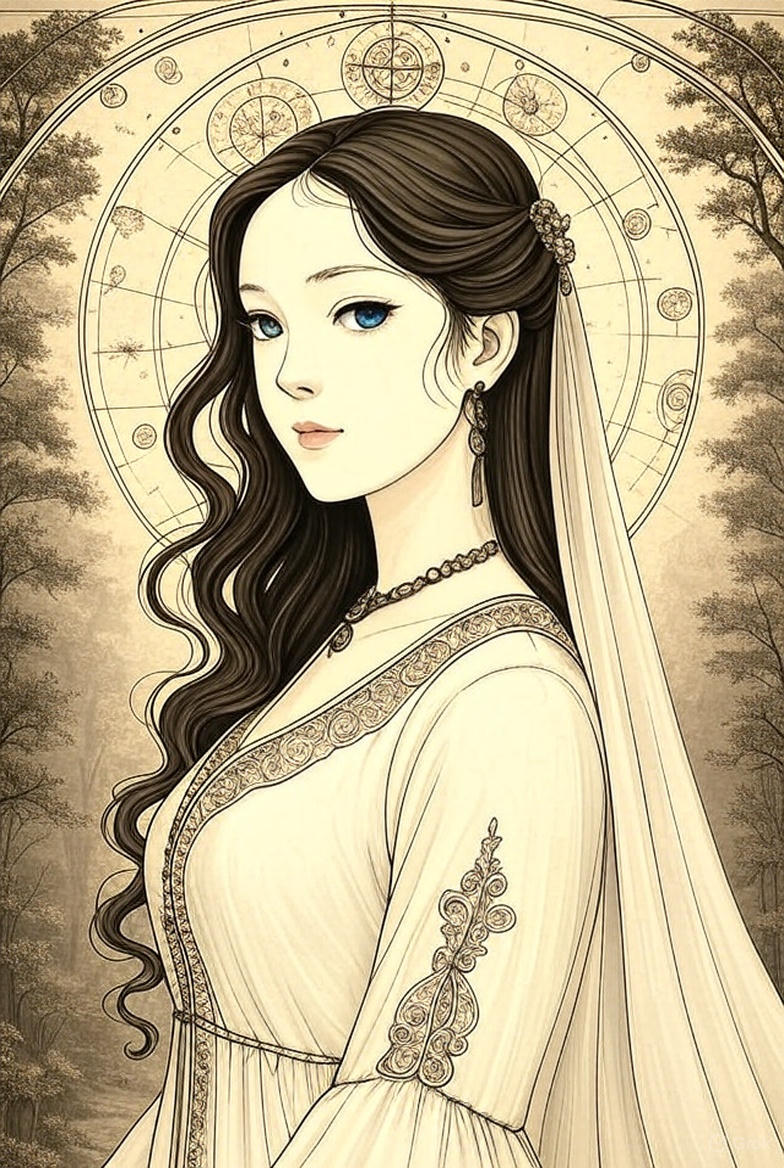
Have you ever stood in a moment so thick with God’s presence that the air itself seemed charged with light? Tears come unbidden, your chest aches with a sweetness you can’t explain, and for a fleeting second the veil between heaven and earth feels paper-thin. Jews for millennia have called that palpable nearness the Shekinah. Christians have pointed to the same experience and whispered, “That’s the Holy Spirit.”
Are they speaking about the same reality with different vocabulary? Many theologians—ancient rabbis, church fathers, and modern scholars alike—quietly say yes.
Some of the herbal allies mentioned here are shared through affiliate links, meaning I may receive a small blessing of support if you choose to journey with them—always at no extra cost to you.

Shekinah: The Dwelling Presence
The word Shekinah never appears in the Torah itself. It is a rabbinic term derived from the Hebrew root shakan—“to dwell, to settle, to abide.” The rabbis used it to speak of God’s nearness without risking the anthropomorphisms that frightened them after the Temple’s destruction. When the glory cloud filled Solomon’s temple so powerfully that the priests could not stand to minister (1 Kings 8:10-11), that was the Shekinah. When a luminous cloud guided Israel by night through the wilderness, that was the Shekinah. When Ezekiel saw the glory depart eastward from a profaned Jerusalem, heartbroken rabbis centuries later still wept for the vanished Shekinah.
In Jewish mysticism, especially the Kabbalah, the Shekinah takes on an almost heartbreaking personality. She is the Divine Feminine exiled with her people, wandering homeless until the world is repaired and she can return to her Beloved above. The Zohar speaks of her in tender, maternal language: the lower Shekinah who gathers her children under wings of light, who groans with creation, who longs for reunion.

The Holy Spirit: The Same Glory in New Wineskins
Walk forward a few centuries. Jesus promises “another Paraclete” who will be with us and in us (John 14:16-17). At Pentecost, fire appears above heads and a sound like a mighty wind fills the house—echoes of Sinai, echoes of the dedication of the Temple. The same pillars of cloud and fire that once revealed the Shekinah now rest on ordinary fishermen and homemakers.
Early Christians noticed the overlap immediately. The brightness that blinded Paul on the Damascus road is described in Acts with language lifted straight from Ezekiel’s vision of the Shekinah departing and returning. The Spirit who “hovers” (merakhefet) over the waters in Genesis 1:2 uses the same rare Hebrew verb later applied to God’s protective presence over Israel (Deut 32:11)—the same presence the rabbis called Shekinah.
A Divine Feminine Whisper in a Masculine Trinity?
Here is where things grow beautifully provocative.
Hebrew grammar is gendered. Ruach—the word for Spirit—is feminine. Wisdom (Hokhmah in Hebrew, Sophia in Greek) is feminine. And the Shekinah, though not a noun in the biblical text, is always treated as grammatically feminine in rabbinic literature. When the church began speaking almost exclusively in Greek and Latin—languages whose word for spirit (pneuma, spiritus) is neuter or masculine—the feminine voice grew quieter. Yet it never vanished.
Syriac Christians, whose language is close to Jesus’ own Aramaic, retained the feminine pronoun when speaking of the Holy Spirit well into the Middle Ages. The great Jewish-Christian dialogue of the last century has heard Jewish scholars point to the Shekinah and say, “This is the part of God you Christians call the Holy Spirit—the nurturing, indwelling, maternal presence.”
Even the fiery Pope John Paul II, hardly a radical feminist, wrote in Mulieris Dignitatem that the Holy Spirit exhibits “feminine” traits in Scripture: giving life, renewing the face of the earth, brooding over chaos like a mother bird.
One Presence, Many Faces
So are Shekinah and Holy Spirit strictly identical? The answer depends on whom you ask.
- Strict Trinitarian theologians will insist the Holy Spirit is a distinct Person of the Godhead, while Shekinah is a post-biblical term for God’s manifest presence—related, but not interchangeable.
- Mystics, charismatics, and many Messianic Jews hear no real contradiction. They experience the cloud of glory resting on a worship gathering and feel no need to choose between names. It is the same ruach, the same kavod, the same overwhelming nearness of the Living God.
I have been in rooms where Jewish and Christian worshipers prayed together—some lifting hands and singing “Come Holy Spirit,” others swaying and chanting ancient piyyutim for the return of the Shekinah—and the atmosphere became so saturated that the theological dictionaries felt suddenly irrelevant. The Presence does not seem overly concerned with our terminology.
Come, Thou Long-Expected Glory
Perhaps the most honest posture is awe-filled humility. The God who thundered from Sinai is the same God who whispered peace to Elijah in a still small voice, the same God who overshadowed a young Jewish girl in Nazareth, the same God who fills believing hearts today with fire and comfort. Sometimes we meet Him as Father. Sometimes as the Son who took on flesh. And sometimes—especially when tears fall without warning and strangers embrace like family—He draws near as the Shekinah-Holy Spirit, the Divine Mother-love who has never stopped searching for her children in exile.
May that Glory cloud settle again—on synagogues praying for redemption, on churches crying “Maranatha,” on every heart that dares to say, “Come.”
Because whether we call Her the Shekinah or Him the Holy Spirit, the prayer is finally the same:
Dwell among us once more. Make Your home in us. Let us feel the weight of Your nearness until the whole earth is filled with the knowledge of the glory of the Lord as the waters cover the sea.
And I suspect, in that day, we will not argue about names at all. We will simply fall silent, faces shining, caught up in the light we spent centuries trying to describe.

Unveiling the Shekinah: The Divine Feminine in Kabbalah
In the hidden chambers of Jewish mysticism, few symbols evoke as much longing, tenderness, and cosmic drama as the Shekinah. She is not a distant goddess on a pedestal but God’s own indwelling presence—the radiant, nurturing, often heartbroken feminine face of the Divine who walks among us, weeps with us, and yearns for reunion.
While the Bible speaks of God’s glory “dwelling” (shakan) in the Tabernacle or Temple, Kabbalah transforms this into a living feminine archetype. The word Shekinah itself—derived from the same root—becomes a name whispered in awe by mystics for over a thousand years.
The Shekinah on the Tree of Life
At the heart of Kabbalistic cosmology stands the Tree of Life, a map of divine emanations (Sefirot) flowing from the infinite Ein Sof (the unknowable Godhead) into creation.
The Shekinah is most intimately identified with Malkuth (Kingdom), the tenth and lowest Sefirah—the point where divine light touches the material world.
Yet Kabbalists also speak of an Upper Shekinah linked to Binah (Understanding), the Great Mother who births form from the void, and a Lower Shekinah in Malkuth—the Daughter or Bride who receives and embodies that light below.
She is the moon reflecting the sun’s brilliance, the receptacle gathering the flow of all higher Sefirot into our reality. Without her harmonious alignment, the cosmos itself falters.
Bride, Queen, Exile: The Many Faces of Shekinah
The Zohar—the luminous 13th-century masterpiece of Kabbalah—paints the Shekinah in breathtaking, intimate imagery:
- The Bride → Waiting in her chamber for her Beloved (the Holy One, often symbolized by Tiferet or the six central Sefirot collectively known as Ze’ir Anpin).
- The Queen → Crowned on the Sabbath, when divine energies unite in sacred marriage.
- The Matronita → The noble lady who descends each Friday eve to bless the world.
- The Exiled Mother → Wandering homeless with her children Israel, grieving the destroyed Temple—her earthly home.
When Israel sins, the Shekinah is torn from her divine Partner and goes into galut (exile) alongside the people. The Zohar weeps: “My children are in exile, my sanctuary is destroyed, and I must climb to the roofs!”
This exile is not mere metaphor. It is the cosmic fracture at the heart of reality—the reason the world feels broken. Redemption (tikkun) comes when humanity’s righteous acts reunite the lovers, drawing the Shekinah back upward in embrace.
Every mitzvah, every act of loving-kindness, is an erotic-spiritual gesture inviting the Bride home.
The Sabbath: Weekly Taste of Redemption
No ritual captures Shekinah symbolism more beautifully than Shabbat.
The Zohar teaches that on Friday evening, the Shekinah descends as a radiant Bride. Jewish homes become her bridal canopy: candles lit in her honor, tables set like altars, braided challah evoking her flowing hair.
Husbands sing “Eshet Chayil” (Woman of Valor from Proverbs) to their wives, seeing in them a reflection of the Shekinah herself. The marital bed on Friday night is sanctified as a mirror of the divine union above—restoring cosmic harmony through human love.
Moon, Rose, Dove: Poetic Symbols
Kabbalists layer the Shekinah with natural and biblical emblems:
- The Moon — Ever-changing, receptive, shining only by reflected light—yet queen of the night.
- The Rose — Especially the mystical “Rose of Sharon,” with thirteen petals symbolizing divine mercy.
- The Dove — Mourning in exile yet returning with olive branches of peace.
- The Lower Waters — Yearning upward toward the heavenly fire, just as she longs for reunion.
The Shekinah Today: Healing the Divine Feminine
In our era, the Shekinah calls louder than ever.
Jewish feminists have reclaimed her as a powerful image of the Divine Feminine long suppressed in patriarchal readings. Mystics across traditions—Jewish, Christian, and beyond—feel her as the nurturing Spirit who groans with creation, exiled yet ever-present in acts of beauty, justice, and compassion.
She reminds us: the Divine is not only transcendent thunder but immanent tenderness. God is not only Father but Mother, not only King but Queen, not only above but within.
To pray for the Shekinah’s return is to pray for the healing of the world—for the end of exile, the mending of broken hearts, the reunion of all opposites in love.
May she who dwells in the dust rise again.
May the Bride return to her Beloved.
May we prepare the bridal chamber in our own souls—and feel the gentle weight of glory settle once more among us.

The Zohar’s Shekinah: Heartbreaking and Radiant Stories from the Book of Splendor
The Zohar (literally “Radiance”), composed in 13th-century Spain and attributed to the ancient sage Rabbi Shimon bar Yochai, is the crown jewel of Kabbalah. Within its pages the Shekinah is no abstract theological concept—she is a living, breathing, weeping, rejoicing feminine presence. The Zohar tells stories about her the way lovers speak of a beloved who is far away: with longing, with tears, with wild hope.
Here are some of the most poignant and influential Shekinah narratives from the Zohar, retold and explained.
1. The Shekinah in Exile with Her Children
(Zohar II:189b; III:66a, and many others)
When Israel was exiled from the land, the Shekinah refused to remain in heaven.
“She said: ‘If My children are in exile, I will go into exile with them.’”
The Zohar describes her climbing onto ruined walls at night, kissing the dust of the destroyed Temple, and crying out:
“Woe to the children because of whose sins I was driven from My Husband’s table!”
In one haunting passage she appears as a grieving woman in black, wandering the roads of Babylonia among the exiles. A sage recognizes her and weeps:
“Matronita! Queen! How long will You dwell in the dust?”
She replies: “Do not weep for Me more than for My children… I have no resting place until they return.”
This is the origin of the Jewish custom of placing one’s head on the ground during the Tachanun prayer—symbolically comforting the mourning Shekinah.
2. The Nightly Descent of the Shekinah on Shabbat Eve
(Zohar II:135a–136b – the famous “Idra Rabba” section on the Sabbath Bride)
Every Friday at twilight, three angelic hosts ascend and announce:
“Prepare the bridal chamber for the holy Queen!”
The Shekinah descends clothed in seven clouds of glory, adorned with 370,000 crowns of light. She enters the bridal canopy formed by every Jewish home that lights Sabbath candles.
Wherever a table is set with wine, challah, and joy, she kisses the household and blesses it threefold.
But in homes where there is quarreling or neglect of the Sabbath, she turns away weeping:
“My face is covered with tears, for My Husband is far from Me.”
This is why the Zohar calls the Sabbath “the day of the soul’s wedding” and why the Song of Songs is read on Friday night—the earthly marriage bed becomes a mirror of the reunion above.
3. The Shekinah and the Moon’s Diminishment
(Zohar I:19b–20a – the mystery of the moon’s “defect”)
At creation, sun and moon were equal. The moon (symbolizing the Shekinah/Malkuth) complained: “Two kings cannot share one crown.”
God responded: “Go, then, and make yourself smaller.”
The Shekinah accepted the diminishment so that the world could exist in harmony (because pure unity cannot sustain multiplicity). Ever since, she shines only by reflected light—yet she is destined to be restored to full glory in the messianic era.
The Zohar links this to Kiddush Levanah (Sanctification of the Moon): when Jews dance under the new moon and bless her restoration, the Shekinah is comforted and grows toward wholeness.
4. The Tears of the Shekinah and the Morning Shema
(Zohar II:216a)
Every midnight, the Holy One, blessed be He, enters the Garden of Eden to delight with the righteous. At that same hour the Shekinah weeps over the destruction of the Temple.
Her tears fall into the Great Sea, producing a sound heard throughout 500 worlds. This cosmic tremor awakens King David, who rises to recite midnight prayers (Tikkun Chatzot). His harp plays by itself, and his tears mingle with hers.
When Israel rises in the morning and recites the Shema with intention, uniting the divine names, the Shekinah is clothed in light once more and ascends to kiss the Holy One.
5. The Shekinah as Mourning Dove
(Zohar III:197a)
In a vision, Rabbi Abba sees a dove with a broken wing circling the ruins of the Temple.
He asks: “Who wounded you?”
The dove answers: “My Beloved struck me when He struck my children.”
Yet every day she returns, cooing three times—corresponding to the three daily prayers. As long as Israel prays, she refuses to abandon hope.
6. The Erotic Reunion on Shabbat
(Zohar I:48a; II:88b–89a)
On the Sabbath, the Holy One (symbolized by the masculine Ze’ir Anpin) and the Shekinah unite in sacred marriage. The Zohar uses the most daring, sensual language:
“He embraces Her, kisses Her, unites with Her face to face… All the worlds rejoice, for all harsh judgments are sweetened.”
Human couples who make love on Friday night with holiness of intention participate in this cosmic union, drawing down an extra soul of purity for any child conceived that night.
7. The Final Ingathering
(Zohar I:152b; III:296a)
In the future redemption, the Shekinah will be lifted from the dust. A heavenly voice will proclaim:
“Shake yourself from the dust, arise! Put on your beautiful garments, My people!” (Isaiah 52:1–2)
The moon will be restored to the brightness of the sun. The Bride will enter beneath the eternal canopy, never to be separated again.
Until then, every act of kindness, every Torah study, every tear of repentance is a love letter sent upward, hastening her return.
A Living Voice Across the Centuries
These are not mere allegories to the Zoharic masters. They are mystical events happening continuously in the upper worlds. When you light Shabbat candles, the Zohar says you are literally crowning the Queen. When you comfort a stranger, you are drying the tears of the Shekinah in exile.
The Zohar’s Shekinah stories are an invitation: the Divine Feminine is not far away in heaven. She is here, in the dust, in the broken hearts, in the candle flames, in every act of love—waiting for us to recognize her, to call her home.
“Come, my Beloved, to meet the Bride; let us welcome the Sabbath Queen.”
— Lecha Dodi, 16th-century hymn inspired directly by the Zohar
May we all become worthy messengers, carrying word to the weeping Matronita that her long exile is nearing its end.

Leave a Reply