
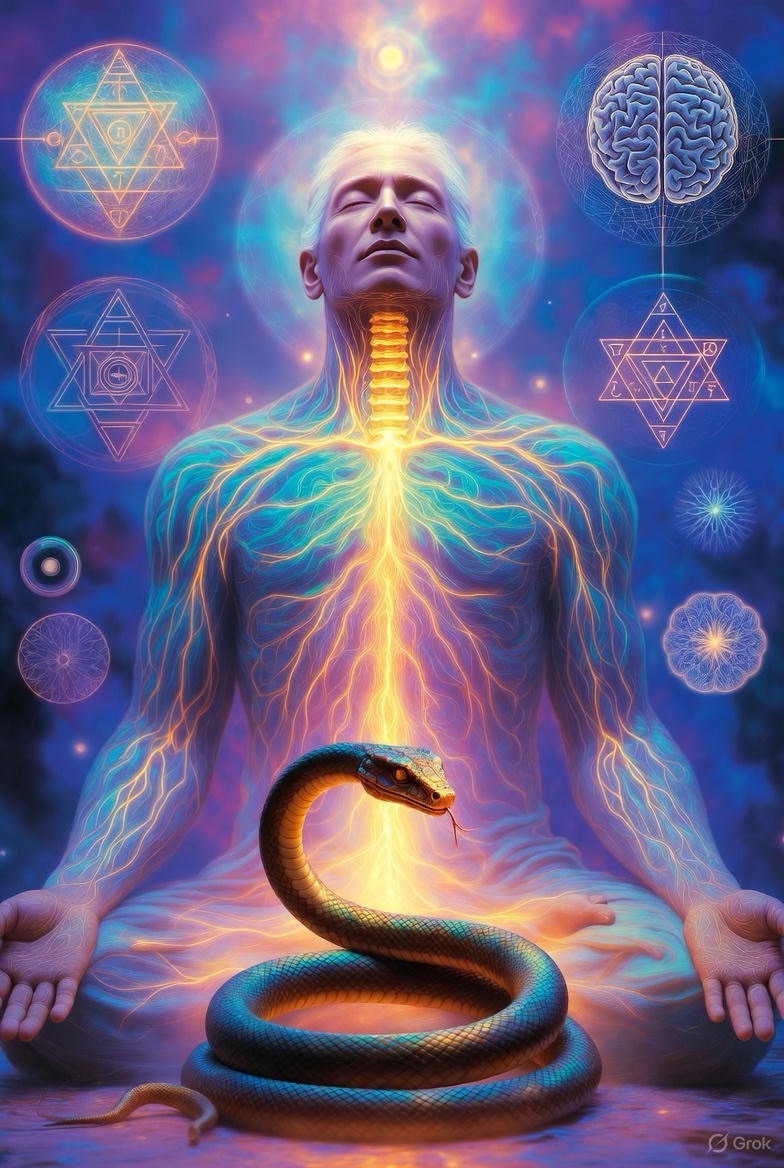
In an era where burnout is the new normal and anxiety apps promise quick fixes, imagine a profound, ancient pathway to renewal that doesn’t require a prescription or a subscription. Spiritual mystical experiences—those transcendent moments of unity, awe, and divine connection—can act as a powerful reset for the nervous system, purging accumulated stress and recalibrating our biological circuitry for harmony. This isn’t just poetic fancy; it’s a convergence of cutting-edge neuroscience and timeless esoteric wisdom.
Drawing from the profound insights of ancient texts like the Upanishads and the Kabbalah, alongside modern understandings of neuroplasticity and the autonomic nervous system, we can explore how these ethereal encounters serve as a cosmic Ctrl+Alt+Delete for our overtaxed bodies and minds. Whether through meditation-induced visions, shamanic journeys, or spontaneous epiphanies, these experiences dissolve the barriers between the self and the infinite, triggering physiological shifts that echo the restorative powers of deep sleep or therapeutic interventions. As we delve deeper, we’ll uncover how this mystical reset isn’t reserved for ascetics on mountaintops but is accessible to anyone willing to embrace the unknown, blending the empirical rigor of science with the enigmatic depths of spiritual lore to offer a holistic blueprint for inner rebirth.

The Overloaded Circuit: Understanding Nervous System Fatigue in the Modern World
Picture your nervous system as an intricate web of electrical highways, constantly buzzing with signals that dictate everything from your heartbeat to your fight-or-flight responses. In today’s hyper-connected society, this network often operates in overdrive, bombarded by relentless stimuli—endless notifications, chronic deadlines, and the subtle hum of existential dread. Modern medicine, particularly neurology and psychiatry, describes this as sympathetic nervous system dominance, where the body’s stress response, governed by the hypothalamus-pituitary-adrenal (HPA) axis, floods us with cortisol and adrenaline, leading to conditions like chronic fatigue, insomnia, and even autoimmune disorders. Studies from institutions like Harvard Medical School highlight how prolonged activation of this system erodes neural pathways, impairing the parasympathetic branch responsible for rest and digestion, essentially trapping us in a loop of wired exhaustion.
But here’s where the esoteric enters the fray: ancient texts such as the Yoga Sutras of Patanjali speak of “prana,” the vital life force that flows through nadis (energy channels akin to nerves), which can become blocked by samskaras—imprints of past traumas and habitual thoughts. Similarly, in Taoist traditions documented in the Huangdi Neijing, imbalances in qi manifest as physical ailments, mirroring the Western concept of autonomic dysregulation. A mystical experience, then, acts as a surge of pure consciousness that clears these blockages, much like a defragmentation process in computing, realigning the flow of energy and allowing the parasympathetic system to reclaim its throne.
This blend of perspectives reveals that what we dismiss as “woo-woo” might actually be a sophisticated bio-hack, where the dissolution of ego in a moment of cosmic oneness—described in the Rig Veda as merging with Brahman—triggers measurable changes, such as reduced amygdala activity and enhanced vagal tone, fostering a state of profound relaxation that resets the entire neural ecosystem.
Ecstatic Encounters: The Neurochemistry of Divine Intervention
Delving into the alchemy of mystical states, we find a fascinating interplay between brain chemistry and spiritual revelation that could redefine how we approach mental health. Neuroscientists, armed with fMRI scans and EEG readings, have observed that during peak mystical experiences—often induced by practices like deep meditation, breathwork, or entheogens—the default mode network (DMN), that chatterbox of self-referential thoughts, quiets down dramatically. This network, implicated in rumination and anxiety, gives way to heightened activity in the insula and anterior cingulate cortex, regions tied to empathy, interoception, and altered states of consciousness.
Psychedelic research from Johns Hopkins University suggests that substances like psilocybin mimic these resets by binding to serotonin receptors, promoting neuroplasticity and dissolving rigid thought patterns, much like how a factory reset erases corrupted files from a device. Yet, ancient esoteric knowledge enriches this narrative profoundly; the Kabbalistic Tree of Life, for instance, maps sephirot as energetic centers that, when aligned through contemplative practices, facilitate a “devekut” or clinging to the divine, which parallels the neurological “ego death” where boundaries blur and universal love floods in. In Sufi texts like Rumi’s Mathnawi, whirling dervishes achieve “fana,” annihilation of the self, which resets the soul’s compass, akin to how modern therapies like EMDR reprocess trauma by overriding sympathetic overdrive.
This synthesis posits that mystical experiences aren’t mere hallucinations but targeted interventions: they spike endogenous DMT or endorphins, recalibrating the endocannabinoid system for homeostasis, while esoteric rituals from shamanic ayahuasca ceremonies in indigenous Amazonian traditions invoke spirit allies to purge “energetic toxins,” offering a multidimensional reset that heals not just the body but the subtle etheric fields described in the Chaldean Oracles. By weaving these threads, we see that the ecstatic is eminently practical—a gateway to rewiring the nervous system for resilience, where the veil between science and spirit thins to reveal a unified path to wholeness.

Ancient Blueprints for Modern Rejuvenation: Lessons from Sacred Scrolls
To truly grasp the transformative power of mystical resets, we must turn to the venerable archives of human spirituality, where sages across millennia have charted maps of inner alchemy that anticipate today’s biofeedback technologies. The Bhagavad Gita, that epic dialogue of cosmic duty, elucidates “samadhi” as a state of superconsciousness where the yogi transcends the fluctuations of the mind (chitta vritti), effectively silencing the sympathetic nervous system’s alarm bells and inviting parasympathetic dominance through pranayama and devotion.
This mirrors contemporary findings in autonomic neuroscience, where controlled breathing activates the vagus nerve, reducing heart rate variability and inflammation—essentially a biological echo of Krishna’s counsel to Arjuna. Meanwhile, in the Hermetic Corpus, attributed to the mythical Hermes Trismegistus, the principle of “as above, so below” suggests that mystical visions align microcosmic neural pathways with macrocosmic harmonies, a concept validated by quantum biology’s exploration of entanglement and coherence in cellular processes. Esoteric traditions like Gnosticism, with texts such as the Gospel of Thomas, emphasize gnosis—direct experiential knowledge—that shatters illusory separateness, triggering a cascade of neurochemical shifts akin to those in mindfulness-based stress reduction (MBSR) programs, which have been shown to thicken the prefrontal cortex for better emotional regulation.
Even in Native American vision quests, as chronicled in oral traditions and later anthropological records, isolation and fasting induce altered states that “reboot” the spirit, purging ancestral traumas stored in what modern epigenetics calls generational imprints on DNA. This fusion of ancient blueprints with empirical data illuminates a profound truth: mystical experiences are evolutionary tools, designed to periodically overhaul our nervous systems, ensuring adaptability in a chaotic world. By honoring these sacred scrolls alongside lab coats, we unlock a repertoire of practices—from chanting mantras that entrain brainwaves to ecstatic dance that releases stored tension—crafting a personalized reset protocol that bridges epochs and empowers us to thrive amid modernity’s maelstrom.

Embracing the Reset: Practical Pathways to Mystical Renewal
As we synthesize this tapestry of knowledge, the call to action becomes clear: integrating mystical resets into daily life isn’t an esoteric luxury but a vital strategy for nervous system health in our frenetic age. Begin with accessible gateways like mindfulness meditation, rooted in Buddhist Vipassana as detailed in the Visuddhimagga, which trains the mind to observe sensations without attachment, gradually diminishing sympathetic hyperarousal and fostering neuroplastic changes that enhance resilience—backed by research from the University of Wisconsin showing meditators’ brains exhibit gamma wave synchrony, indicative of integrated consciousness.
For those drawn to deeper waters, explore guided psychedelic therapies, echoing the Eleusinian Mysteries of ancient Greece where initiates consumed kykeon to experience death and rebirth, now paralleled in clinical trials demonstrating psilocybin’s efficacy in treating PTSD by resetting fear circuits in the amygdala. Esoterically, delve into kundalini yoga from Tantric texts like the Hatha Yoga Pradipika, where coiled energy at the spine’s base awakens through asanas and mudras, surging upward to clear chakras—energy vortices that correspond to endocrine glands, thus harmonizing the autonomic system as per endocrinological studies on yoga’s impact on hormone balance.
Even simple acts like forest bathing, inspired by Shinto reverence for kami in nature, can evoke awe states that, according to positive psychology research, expand time perception and reduce cortisol. The key lies in intention: approach these experiences with reverence, allowing the mystical to unfold as a gentle erasure of neural clutter, much like how the Zohar’s luminous emanations purify the soul. In this blended paradigm, we reclaim agency over our inner worlds, transforming potential breakdowns into breakthroughs, and emerging from each reset not just restored, but reborn—wiser, calmer, and infinitely connected to the grand cosmic design.
Did you know you can now unlock the Illuminarium Mystica Library?
Dive into the planet’s most enchanting and actionable books, designed to supercharge your spiritual journey and reveal elite occult strategies for business success. Now, you too can rise as a prophet of profit, with instant downloads of transformative titles to build your ultimate life.

Awakening the Serpent: Kundalini as the Ultimate Neural Reboot
In the shadowed recesses of ancient yogic lore, Kundalini emerges as a coiled serpent of divine energy, slumbering at the base of the spine, awaiting the call to ascend and ignite a profound transformation. This awakening, often described in Tantric texts like the Shiva Samhita as the unleashing of Shakti—the feminine cosmic force—serves as a dynamic pathway to rebooting the inner wiring through spiritual ecstasy, merging the mundane with the mystical in a symphony of bio-energetic renewal. Modern neuroscience lends credence to this esoteric phenomenon, viewing Kundalini activation as a surge that stimulates the central nervous system, akin to an electrical storm that rewires neural pathways for heightened awareness and vitality. Researchers in psychophysiology, drawing from studies on bioelectricity and the vagus nerve, note how practices that evoke Kundalini—such as specific pranayama techniques or intense meditation—trigger the release of neurotransmitters like serotonin and dopamine, while modulating the HPA axis to alleviate chronic stress responses. This isn’t mere metaphor; it’s a tangible reset where the sympathetic nervous system’s overactivity yields to parasympathetic bliss, fostering neuroplasticity that can heal deep-seated traumas stored in the body’s cellular memory. Esoterically, the Upanishads and the Yoga Kundalini Upanishad portray this ascent through the sushumna nadi—the central energy channel—as a journey piercing the chakras, dissolving karmic blockages and culminating in sahasrara, the crown chakra, where individual consciousness merges with the universal. This ecstatic union, often accompanied by visions, tremors, or waves of rapture, mirrors what contemporary medicine terms “peak experiences” or “flow states,” as documented by psychologists like Mihaly Csikszentmihalyi, where time dilates and self-boundaries dissolve, recalibrating the brain’s default mode network for sustained equanimity. By embracing Kundalini awakening, one doesn’t just reboot the nervous system; they orchestrate a holistic overhaul, blending the alchemical fire of ancient rites with the precision of modern biofeedback, to emerge as a conduit of enlightened energy in an otherwise fragmented world.
The Coiled Power Within: Decoding Kundalini’s Physiological Alchemy
At the heart of Kundalini’s mystique lies its role as a primordial force, symbolized in Vedic hymns as the serpent Ananta, embodying infinite potential coiled in dormancy until roused by disciplined practice or spontaneous grace. This awakening process, detailed in the Hatha Yoga Pradipika as a methodical progression involving bandhas (locks), mudras (gestures), and kriyas (purifications), acts as a masterful reboot for the inner wiring, purging stagnant prana and revitalizing the autonomic nervous system through ecstatic surges. From a medical lens, this mirrors the activation of the endogenous opioid system and the endocannabinoid receptors, where the body’s natural analgesics flood the synapses, reducing inflammation and enhancing synaptic pruning—essentially decluttering neural circuits overloaded by modern life’s cacophony. Studies from institutions like the University of California, San Diego, on yogic practices reveal increased gamma-aminobutyric acid (GABA) levels during such states, promoting a tranquil yet alert mindset that counters the beta-wave dominance of anxiety. Esoterically, the Tantras, including the Vijñāna Bhairava, describe Kundalini’s rise as piercing the granthis—knots of illusion—at the navel, heart, and throat, which correspond to psychosomatic blockages akin to what somatic experiencing therapy identifies as frozen trauma responses in the psoas muscle or solar plexus. As the energy ascends, it ignites kriyas—spontaneous movements or cries—that release pent-up emotional residues, much like how EMDR therapy facilitates bilateral stimulation to reprocess memories, but amplified by the spiritual ecstasy of divine communion. This alchemical process, blending the hermetic wisdom of Egyptian serpent cults with Patanjali’s eight-limbed path, transforms potential energy into kinetic bliss, resetting the biofield as per quantum biology’s insights into coherent photon emissions from DNA during heightened states. Thus, Kundalini awakening transcends mere relaxation; it’s a ecstatic revolution, rewiring the soul’s circuitry to harmonize with the cosmos, offering a profound antidote to the disconnection plaguing contemporary existence.

Navigating the Ecstatic Storm: Safe Practices for Kundalini Ignition
Embarking on the path of Kundalini awakening demands reverence and preparation, for this potent reboot of the inner wiring through spiritual ecstasy can be as tumultuous as it is transcendent, evoking what Gopi Krishna chronicled in his autobiographical accounts as a fiery ordeal leading to sublime enlightenment. Ancient texts like the Kundalini Tantra advise grounding through moola bandha and sattvic living—pure diet and ethical conduct—to ensure the serpent’s rise is steady, preventing the “Kundalini syndrome” of overwhelming symptoms such as heat flashes or psychic disturbances, which modern psychiatry might diagnose as transient dissociative states but esoteric traditions view as necessary purifications. Neurologically, this aligns with the concept of homeostatic plasticity, where the brain adapts to intense stimuli by strengthening inhibitory networks, as seen in EEG studies of long-term meditators showing enhanced theta and alpha waves for deep restorative calm. To safely navigate this, integrate practices from the Goraksha Samhita, such as alternate nostril breathing (nadi shodhana) to balance ida and pingala—the lunar and solar channels—preparing the sushumna for Shakti’s ascent, while contemporary biohacking tools like heart rate variability training via apps can monitor and modulate the autonomic shifts. Esoterically, invoking mantras like “Om Namah Shivaya” from Shaivite scriptures creates vibrational resonance that facilitates the energy’s flow, akin to how sound therapy influences the limbic system to release endorphins and foster emotional catharsis. For those experiencing spontaneous awakenings, grounding techniques—walking barefoot on earth or visualizing roots from the base chakra—draw from Druidic and shamanic wisdom, stabilizing the ecstatic surge and preventing neural overload, supported by research on earthing’s effects on cortisol reduction. Ultimately, this path isn’t for the faint-hearted but for the devoted seeker, offering a ecstatic gateway to rebooting the nervous system, where the fusion of ancient safeguards and modern insights ensures a transformative journey from coiled latency to radiant expansion, illuminating the self as an eternal spark in the divine matrix.
Leave a Reply