The Skeleton Everyone Loves to Hate
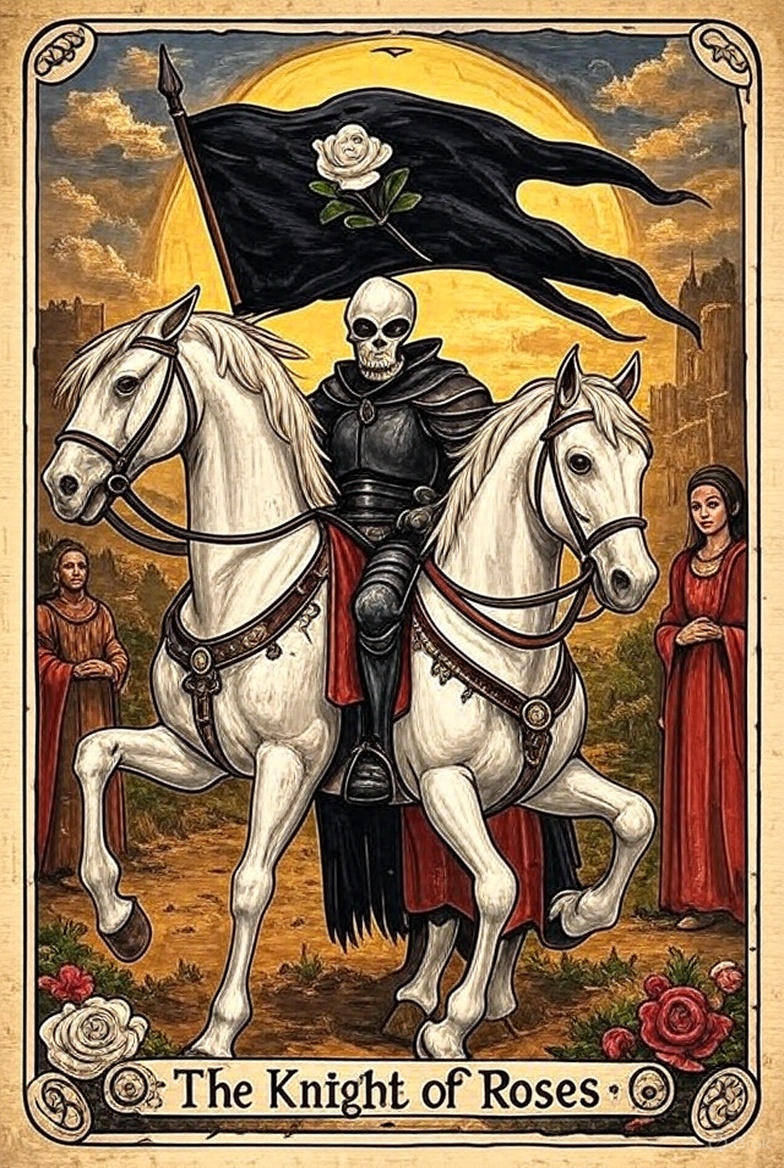
The thirteenth card in the tarot deck, known simply as Death, has been burdened with more dread and misunderstanding than perhaps any other image in the Major Arcana. Most people encounter it for the first time in movies or casual readings and immediately feel their stomach drop: a skeletal figure in black armor astride a white horse, scythe gleaming, a fallen king trampled beneath hoof, and a black banner bearing a white rose fluttering overhead. The symbolism is stark, unapologetic, and undeniably medieval in its menace.
Pop culture has done the rest, turning Card XIII into the ultimate omen of doom, the card nobody wants to see. Yet anyone who has spent real time with the tarot knows that Death is not an ending in the literal, final, coffin-and-graveyard sense (ethical readers will refuse to predict physical death anyway). Instead, it is one of the deck’s deepest expressions of hope disguised as terror, a card that insists on transformation when we would rather stay comfortable in the familiar, even when the familiar has long since begun to rot.

The Law of the Falling Leaves
At its core, the Death card illustrates the law of impermanence that governs every living thing. Something must die so that something else can live. The imagery is deliberate and layered: the skeleton wears armor because transformation is not gentle; it often feels like a battle. The white horse is purity and forward motion; there is no turning back once the process begins.
The child and maiden in the foreground represent innocence and desire meeting the inevitable, while the bishop prays because even religious authority cannot negotiate with this force. In the distance, between two towers, the sun rises—a detail most people miss on first glance. That rising sun is the entire point. Death is not the end of the story; it is the turning of a page so dramatic that the old chapter has to be torn out entirely.
Relationships that have quietly poisoned us for years, careers that hollowed out our souls, identities we built like fortresses only to realize they were prisons—all of these can appear as the fallen king beneath the horse’s feet. The card does not moralize about what must go; it simply announces that the time for clinging has passed.
Why Thirteen Is Perfect
Numerologically and sequentially, the placement of Death at number thirteen is perfect. Western culture has feared thirteen for centuries: the thirteenth guest at the Last Supper, the missing thirteenth floor, the paranoia around Friday the thirteenth. Tarot takes that collective anxiety and transmutes it. Yes, thirteen disrupts.
Yes, it breaks the neat dozen that came before it. But without the rupture there is no growth. Reduce thirteen to its root (1 + 3 = 4) and you arrive at the Emperor’s number—structure, foundation, a new order rising from the ashes. Look at the cards that bracket Death and the logic becomes undeniable. The Hanged Man (XII) demands surrender and a complete reversal of perspective; Death (XIII) enacts the release; Temperance (XIV) arrives afterward to blend what was with what will be, healing the wound and revealing the alchemical gold. This is not random symbolism—it is a roadmap through the darkest part of the soul’s journey, reassuring us that the night always gives way to dawn.
The Moment the Room Stops Breathing
In actual readings, the moment Death appears is almost comical in its predictability: eyes widen, breath catches, someone jokes about canceling the rest of the session. Then the explanation begins, and the energy in the room shifts from fear to recognition. I have watched people exhale years of tension when they realize the card is naming something they already felt dying inside them—a marriage that survived on autopilot, a friendship turned toxic, an addiction they were finally ready to release, a grief they had been carrying like a second skeleton.
One client pulled Death the very week she filed for divorce after a decade of emotional abuse; another drew it the day before a layoff that forced him to start the business he had dreamed of for fifteen years. Even reversed, the card rarely cancels the change; it simply shows how fiercely we are resisting it, how much energy we waste trying to embalm what is already corpse-cold. The message is gentle in its brutality: stop resuscitating the dead thing. Let it go. There is new life waiting on the other side, and it cannot come until you clear the ground.
Don’t Fear the Reaper—Thank Him
So the next time the skeleton rider appears in your spread, do not flinch. Light a candle if you must, but do not bargain with him. He is not your enemy. He is the compassionate midwife of the soul, arriving precisely when the old version of you has served its purpose and the new version is crowning. The scythe is not raised to destroy you; it is raised to cut the cords that have kept you tethered to a life too small. Beneath the black flag blooms a white rose—purity reborn from decay. Between the towers, the sun is already rising. All you have to do is let the dead bury the dead and walk toward the light that has been waiting for you all along.
Did you know you can now unlock the Illuminarium Mystica Library?
Dive into the planet’s most enchanting and actionable books, designed to supercharge your spiritual journey and reveal elite occult strategies for business success. Now, you too can rise as a prophet of profit, with instant downloads of transformative titles to build your ultimate life.

Leave a Reply