
In the hustle of modern life, where stress lurks around every corner and our minds race like untamed horses, there’s a simple yet profound secret that has been whispered through the ages: the power of your breath. Imagine harnessing the invisible force that sustains every cell in your body, transforming it into a tool for vitality, calm, and even enlightenment. This is the essence of Pranayama, the yogic practice of breath control that originated in ancient India over 5,000 years ago. Derived from the Sanskrit words “prana” (life force or vital energy) and “ayama” (to extend or control), Pranayama isn’t just about inhaling and exhaling—it’s about awakening the dormant energy within you, balancing your body and mind, and tapping into a wellspring of health that modern science is only beginning to validate.
Picture this: In the serene ashrams of ancient sages, practitioners would sit in lotus pose at dawn, guiding their breath like a maestro conducts an orchestra. Today, this practice has transcended yoga mats and found its way into hospitals, therapy sessions, and even corporate wellness programs. But what makes Pranayama so fascinating? It’s the bridge between the physical and the subtle, where a few minutes of intentional breathing can shift your nervous system from fight-or-flight to rest-and-digest, fostering resilience in an unpredictable world. Let’s dive deeper into its descriptions, explore practical exercises, and uncover the science-backed benefits of making it a daily ritual.

What is Pranayama?
At its core, Pranayama is a set of breathing techniques designed to regulate and expand prana, the vital life energy that flows through subtle channels called nadis in the body. Unlike ordinary breathing, which is often shallow and unconscious, Pranayama involves deliberate patterns of inhalation (puraka), retention (kumbhaka), and exhalation (rechaka). These techniques range from gentle and meditative to vigorous and energizing, each tailored to influence different aspects of your physiology and psychology.
Rooted in texts like the Yoga Sutras of Patanjali and the Hatha Yoga Pradipika, Pranayama is the fourth limb of Ashtanga Yoga, serving as a preparation for meditation. It’s not merely exercise; it’s a science of energy management. By controlling the breath, you influence the autonomic nervous system, which governs heart rate, digestion, and stress responses. Modern research echoes this ancient wisdom, showing how these practices can induce meditative states and enhance overall well-being.
Key Pranayama Exercises: Step-by-Step Guides
To truly appreciate Pranayama, you have to experience it. Below, I’ll detail three accessible exercises, starting with beginners in mind. Always practice in a quiet, comfortable space, preferably on an empty stomach. Sit upright with a straight spine—cross-legged on the floor or in a chair works. If you’re new, start with 5-10 minutes daily and consult a doctor if you have respiratory issues. Remember, never force the breath; let it flow naturally.
1. Anulom Vilom (Alternate Nostril Breathing): The Balancer
This technique harmonizes the left and right hemispheres of the brain, promoting mental clarity and emotional equilibrium. It’s like a reset button for your mind, ideal for reducing anxiety before a big day.
- Steps:
- Close your right nostril with your right thumb.
- Inhale slowly and deeply through your left nostril for a count of 4.
- Close your left nostril with your ring finger, release your thumb, and exhale through the right nostril for a count of 4.
- Inhale through the right nostril for 4 counts.
- Close the right nostril again and exhale through the left.
- Repeat for 5-10 cycles, gradually increasing the count as you build comfort.
With consistent practice, you’ll notice sharper focus and a sense of inner peace, as it balances the ida and pingala nadis—channels associated with lunar (cooling) and solar (energizing) energies.
2. Kapalabhati (Skull-Shining Breath): The Energizer
Known as the “breath of fire,” this vigorous practice cleanses the respiratory system and invigorates the mind. It’s like a natural espresso shot, boosting oxygen supply to the brain and detoxifying the body.
- Steps:
- Sit comfortably and take a deep inhale.
- Exhale forcefully through your nose in short, rapid bursts (like pumping your belly), emphasizing the exhale while the inhale happens passively.
- Start with 20-30 pumps per round, building to 100 over time.
- After each round, take a deep breath, hold briefly, and exhale slowly.
- Do 3-5 rounds.
This exercise shines the “skull” by clearing mental fog, making it perfect for morning routines. Avoid if you have high blood pressure or are pregnant.
3. Bhramari (Bee Breath): The Calmer
Mimicking the hum of a bee, this soothing technique vibrates the skull and calms the nervous system. It’s a fascinating auditory experience that drowns out mental chatter, ideal for bedtime.
- Steps:
- Close your eyes and ears with your thumbs (or just place fingers lightly over ears).
- Inhale deeply through the nose.
- Exhale slowly while making a humming “mmm” sound, feeling the vibration in your head.
- Repeat for 5-10 breaths.
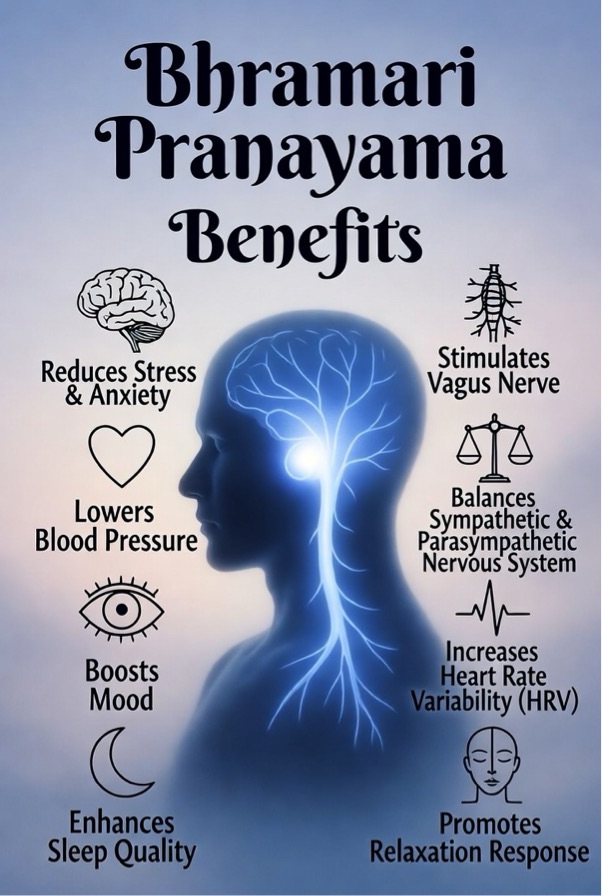
The resonance stimulates the vagus nerve, promoting relaxation and better sleep. 1 “Depiction of Pranayama styles, highlighting the meditative and breathing focus.” “SMALL”
The Transformative Benefits of Consistent Practice
What happens when you commit to Pranayama daily? The rewards are multifaceted, backed by growing scientific evidence. Studies reveal that regular practice can reshape your physiology, much like consistent exercise builds muscle.
- Physical Health Boosts: Pranayama strengthens lung function by increasing vital capacity and efficiency, helping those with respiratory conditions. 2 It lowers blood pressure and heart rate, reducing the risk of cardiovascular issues. 3 One study even found it mitigates arrhythmia risks. 6 Over time, consistent sessions enhance overall immunity and detoxification, as techniques like Kapalabhati expel toxins.
- Mental and Emotional Resilience: In a world plagued by stress, Pranayama shines as a natural antidote. Research shows it reduces anxiety and induces meditative states by modulating the brain’s stress response. 1 Practices like Bhastrika have been linked to lower clinical stress levels. 5 With daily commitment, you’ll experience improved focus, emotional stability, and even better sleep—thanks to methods like 4-7-8 breathing, which promotes relaxation. 8
- Long-Term Holistic Gains: Evidence suggests that various Pranayama types improve physiological and psychological well-being, from neurophysiological effects like increased lung capacity to reduced inflammation. 0 7 Consistent practitioners often report heightened energy, better digestion, and a deeper sense of connection to life itself. It’s not hyperbole; ancient yogis viewed it as a path to longevity and spiritual awakening.
In essence, Pranayama is a cost-effective, accessible superpower. Start small, stay consistent, and watch as your breath becomes the architect of a healthier, more vibrant you. Why not try a session right now? Your future self will thank you.

The Humming Path to Inner Silence: A Deep Dive into Bhramari Pranayama
Origins and Essence of the Bee Breath
Bhramari Pranayama, the ancient yogic practice known as Bee Breath, invites you to transform the simple act of humming into a profound gateway to inner peace, mental clarity, and physiological harmony, drawing its name from the Sanskrit word bhramara, meaning bee, because the gentle, resonant hum produced during exhalation mimics the soothing drone of a bee hovering near a flower in full bloom. Rooted in texts like the Hatha Yoga Pradipika, this technique is far more than a quirky sound exercise—it is a sophisticated form of self-generated sound therapy that vibrates through the bones of the skull, sinuses, throat, and even the deeper structures of the brain, creating a cascade of neurological and biochemical responses that modern science is only beginning to fully appreciate.
Preparing for Practice: Setting the Stage
To begin, find a quiet space where you can sit comfortably with a straight spine, whether cross-legged on the floor or upright in a chair, and close your eyes, softening the muscles of your face. Place your hands in Shanmukhi Mudra if you’re ready—thumbs gently sealing the ear flaps to block external noise, index fingers resting lightly over closed eyelids, middle fingers on the sides of the nose, and ring and pinky fingers relaxed near the mouth—though beginners can simply close their ears with their thumbs or practice without the mudra entirely. Take three slow, natural breaths to settle the body and prepare the mind for the journey inward.
The Core Technique: Inhaling, Humming, Listening
Inhale deeply through the nose for four to six seconds, filling first the belly, then the ribs, and finally the chest. As you exhale smoothly for six to ten seconds, produce a steady, mid-pitched “Mmm…” sound, like the distant buzz of a contented bee, allowing the vibration to reverberate through your head—feel it tingle in the forehead, buzz behind the eyes, and resonate in the throat and jaw. After each humming exhalation, pause for five to ten seconds in the silence that follows, noticing how the inner noise fades into a velvety stillness, a silence so rich it feels almost tangible, like stepping into a soundproof chamber built inside your own skull. Repeat this cycle for seven to eleven rounds, about three to five minutes total.
The Sensory Symphony: What You’ll Feel
The sensation is intimate and alive: a warm, electric hum that seems to massage the brain from within, dissolving mental chatter as if someone turned down the volume on the world. You may notice a gentle buzz in the skull, warmth spreading across the face, tingling at the crown or between the eyebrows, and a profound sense of expansion in the chest. One practitioner described it as “my brain taking a warm bath in honey”—a poetic yet accurate reflection of the soothing, immersive quality of the vibration.
Finishing the Session: Sealing the Calm
As you complete your rounds, release the mudra if used, rest your hands in your lap, and sit quietly for half a minute. Observe the lingering warmth in your face, the subtle expansion in your chest, and the profound calm that settles over your mind like dust after a storm. This brief stillness is where the practice deepens—allowing the nervous system to fully absorb the benefits of the humming vibration.
The Science of Silence: Neurological and Physiological Benefits
With consistent daily practice—ideally in the morning to awaken clarity or at night to invite rest—this simple act begins to rewire your nervous system in remarkable ways. The humming stimulates the vagus nerve, the master regulator of the parasympathetic “rest-and-digest” response, triggering an almost immediate drop in cortisol and heart rate, often reducing state anxiety by twenty to thirty percent in just five minutes. The release of nitric oxide—a potent vasodilator—relaxes blood vessels, lowers blood pressure by an average of eight to ten millimeters of mercury over six weeks, and improves circulation to the brain, enhancing focus, memory, and emotional regulation.
Healing Through Vibration: Physical and Emotional Renewal
Over time, the vibrations clear sinus passages, reduce tension headaches, and improve sleep architecture, with EEG studies showing increased theta brain waves—the signature of pre-sleep relaxation. Practitioners report falling asleep in under ten minutes after weeks of bedtime sessions, down from hours of restless tossing. Emotionally, Bhramari softens the amygdala’s reactivity, building resilience to stress triggers, while cognitively, it boosts gamma brain wave activity linked to insight and creativity, with one twelve-week study showing significant improvements in working memory among students who practiced daily.
Advanced Variations: Deepening the Practice
After two or three weeks of consistent practice, variations emerge naturally. Try mental Bhramari, where you inhale and then silently repeat “Mmm…” in the mind during exhalation, retaining the subtle vibration without sound—perfect for discreet practice in meetings or public spaces. Or combine it with alternate nostril breathing, ending each cycle with a humming exhale to balance the ida and pingala energy channels. You can also infuse the hum with visualization, imagining it as golden light pouring into the skull, dissolving dark clouds of worry and illuminating the inner landscape like sunrise over a misty valley.
Safety First: Guidelines and Contraindications
Safety is simple but essential—avoid the practice if you have active ear infections, severe sinus blockages, or recent head surgery. Pregnant women should skip the mudra and hum gently without pressure on the ears. Always listen to the body and never force the breath, stopping immediately if dizziness arises and returning to natural breathing.
The 30-Day Bhramari Challenge: Building a Habit of Stillness
Commit to a thirty-day journey to experience the full transformative power of Bhramari. Start with five minutes nightly in week one to anchor the vibration, add a morning session in week two to feel the energizing clarity, experiment with pitch and duration in week three—higher tones vibrating the forehead and third eye, deeper tones grounding in the chest—and by week four, use it in real-time during stress, like before a presentation or in traffic, transforming triggers into opportunities for calm. Keep a journal to track shifts in mood, sleep quality, and mental sharpness, and you’ll likely notice by day twenty-one a new baseline of inner quiet, a mind that returns to stillness more easily, as if the bee’s hum has trained your brain to find silence on command.
A Radical Act of Reclamation: Bhramari in a Noisy World
In a world that bombards the senses with noise and demands constant output, Bhramari Pranayama is a radical act of reclamation—a love letter to your nervous system, a daily ritual that reminds you that peace is not something you chase, but something you cultivate, breath by breath, hum by hum, until the stillness you seek is no longer a destination, but the very ground you walk on.
Did you know you can now unlock the Illuminarium Mystica Library?
Dive into the planet’s most enchanting and actionable books, designed to supercharge your spiritual journey and reveal elite occult strategies for business success. Now, you too can rise as a prophet of profit, with instant downloads of transformative titles to build your ultimate life.

Leave a Reply