Some of the herbal allies mentioned here are shared through affiliate links, meaning I may receive a small blessing of support if you choose to journey with them—always at no extra cost to you.

Buy now on Amazon
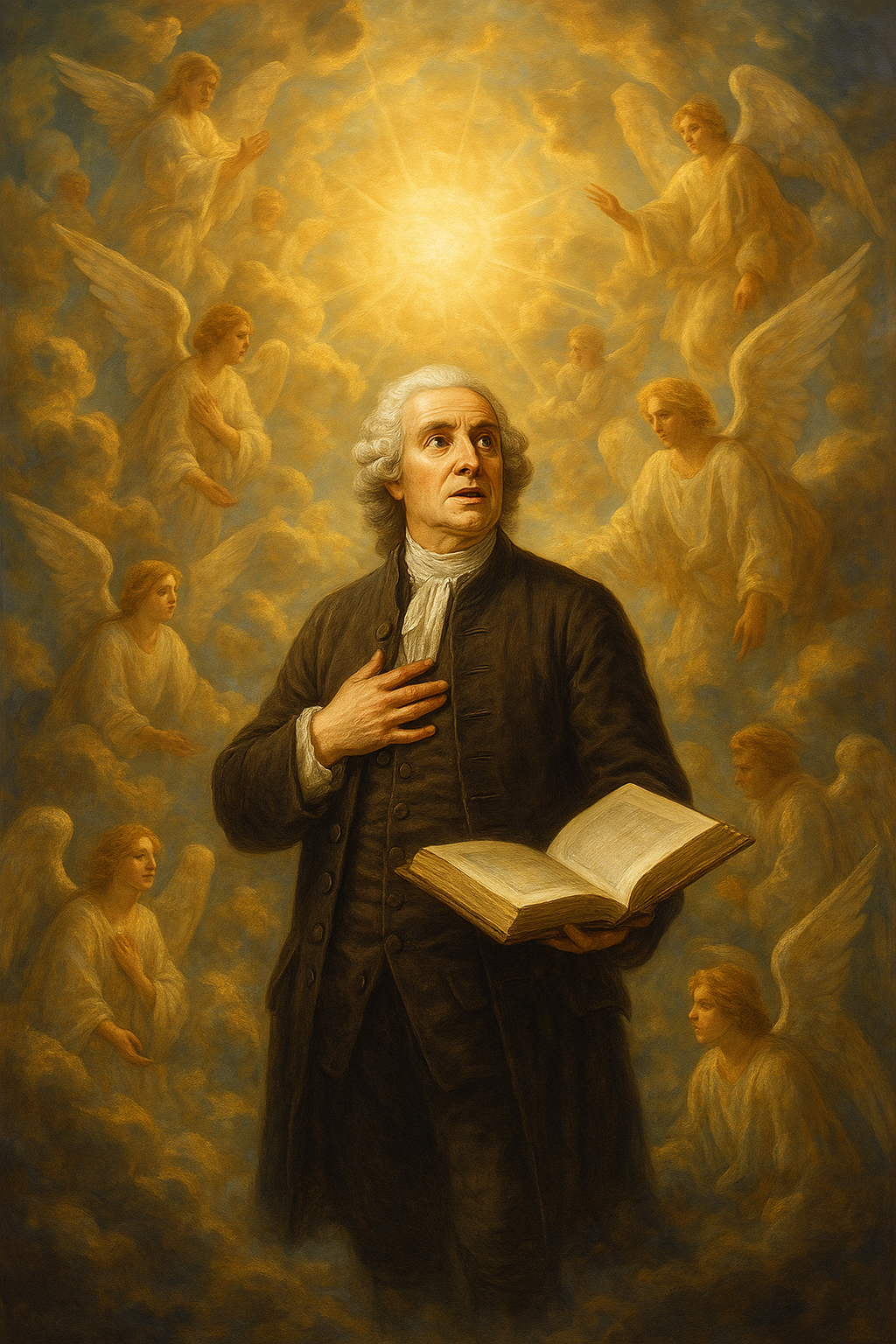
When you think of someone who might’ve had a casual chat with angels over breakfast, dissected the human brain before lunch, and then jotted down a few prophecies before dinner—all in the 18th century—only one name fits the bill: Emanuel Swedenborg. This man wasn’t just ahead of his time; he seemed to live outside of time altogether, a polymath whose curiosity danced through disciplines like a child in a candy store. Born in Stockholm in 1688, Swedenborg was raised in a deeply religious household, the son of Jesper Swedberg, a bishop with a mighty belief in divine providence and the whisperings of the spiritual realm. Little did anyone know, young Emanuel would grow up not just to whisper back—but to answer with libraries worth of cosmic insight.
In his early life, Swedenborg was the Enlightenment’s poster child. He studied everything: mathematics, physics, astronomy, mechanics, geology, anatomy, philosophy—you name it. The man basically had a standing reservation at the banquet of knowledge. Appointed to the Swedish Board of Mines, he was a respected scientist and inventor, writing exhaustively on metallurgy, engineering, and even proposing a flying machine decades before the Wright brothers ever lifted a wing. But even with all that grounded genius, the real story of Swedenborg—the one that turns heads and raises eyebrows—didn’t really begin until he was well into his fifties. That’s when Emanuel took a bold dive off the edge of reason into the deep waters of mysticism. And not with a timid toe dip, mind you, but a full cannonball of spiritual awakening.
It all started with some dreams. But not your average, forgot-to-wear-pants-to-school dreams—no, Swedenborg began having vivid, symbolic visions filled with angels, demons, heavenly cities, and divine revelations. Picture an 18th-century scientist suddenly thrust into a living Tarot card deck where every symbol had a message from the Divine. Then imagine that same scientist calmly getting up the next morning, brewing some coffee, and writing it all down with the rigor of a lab report. That’s what Swedenborg did. For the next several decades, he documented his spiritual experiences in sprawling works like Heaven and Hell, Divine Love and Wisdom, and Secrets of Heaven. His central claim? That he was granted access to the spiritual world, and not just as a tourist—he had a season pass.

Buy now on Amazon
Swedenborg’s spiritual writings are like a metaphysical roller coaster: they lift you to celestial heights, flip you through symbolic loops, and drop you into moral truths with a surprising gentleness. He described heaven not as a place of clouds and harps, but as a state of being, a realm organized by love and wisdom where your inner soul determines your eternal neighborhood. And hell? Not fiery pits, but the natural outcome of selfishness, pride, and disconnection from the Divine source. His descriptions of the afterlife are oddly bureaucratic yet warmly reassuring, as if the universe runs like a well-loved Swedish co-op. Want to know what angels eat? Swedenborg had thoughts. Wonder if marriage exists in heaven? He wrote an entire book about it. Curious about God’s plan for the planets? Sit down, he’s got a few volumes on that too.
What makes Swedenborg so delightful, aside from his heavenly rolodex, is how grounded he remained throughout. He never formed a church (though the Swedenborgian Church was later established in his honor), never claimed to be a messiah, and didn’t even charge admission for his celestial insights. He just wrote—furiously, consistently, as if the ink in his pen was sourced directly from the Tree of Life. Despite being a mystic, Swedenborg never renounced science or reason. Instead, he fused them. He believed true spirituality had to be reasonable and that Divine wisdom expressed itself through the natural order of things. This, perhaps, is Swedenborg’s enduring charm: his belief that Heaven speaks in logic as much as in love.
Today, Swedenborg may not be a household name, but his fingerprints are quietly smudged across the pages of Western spirituality. He influenced thinkers like William Blake, Ralph Waldo Emerson, Carl Jung, and even Helen Keller. His ideas planted seeds in the soil of spiritual psychology, holistic theology, and even the notion of near-death experiences. Yet, for all his cosmic credentials, he remains oddly approachable, like a brilliant grandfather who just happens to astral travel between dinner and dessert. Emanuel Swedenborg reminds us that curiosity is divine, that wisdom wears many faces, and that sometimes the most incredible journey doesn’t begin in youth but when we’ve already walked many miles and dare to turn inward.
So next time you find yourself pondering the mysteries of life, death, and whether angels wear shoes, remember Swedenborg. He probably asked the same questions—then wrote three books about the answer.

Leave a Reply