Have you ever wondered if there’s a spiritual path that doesn’t ask you to renounce the world but instead invites you to embrace it fully—body, mind, and soul?
Enter Tantra, an ancient esoteric tradition that’s often shrouded in misconceptions, reduced to whispers of exotic rituals and sacred sexuality. But Tantra is so much more: it’s a profound philosophy that weaves the threads of the divine into the fabric of everyday life, challenging us to see the sacred in the sensual and the eternal in the ephemeral. Originating from the heart of ancient India, Tantra has influenced everything from yoga to modern mindfulness, offering a roadmap to empowerment and enlightenment. Let’s dive into its rich history and timeless philosophy, uncovering why this “forbidden” knowledge continues to captivate seekers worldwide.

The Ancient Roots: How Tantra Emerged from the Shadows
Tantra’s story begins in the mists of prehistory, with echoes in the earliest Vedic hymns of the Rigveda and Atharvaveda, where the word “tantra” originally meant a loom or a systematic framework. But it wasn’t until around the 5th to 6th century CE, during the turbulent post-Gupta era, that Tantra truly blossomed as a distinct tradition. Born in regions like Kashmir, Bengal, and Assam, it first took root in Hindu Shaivism and Shaktism, sects devoted to the god Shiva and the goddess Shakti.
Imagine a time of political upheaval and cultural fusion: as empires rose and fell, Tantra absorbed influences from indigenous tribal practices, Buddhism, and even distant lands. By the 7th century, a wave of Tantric texts flooded the subcontinent, with the golden “Tantric Age” stretching from the 8th to 14th centuries. These scriptures, known as Tantras or Agamas, were penned in Sanskrit and spread like wildfire to Nepal, Tibet, Indonesia, and beyond—even reaching China, Korea, and Japan.
Key visionaries shaped this evolution. In Kashmir, the philosopher Abhinavagupta (c. 950–1025 CE) masterminded non-dual Shaivism, blending aesthetics, ritual, and metaphysics into a cohesive system that saw art and ecstasy as portals to the divine. Meanwhile, in Buddhist circles, figures like Atisha integrated Tantra into the Mahayana path, giving rise to Vajrayana Buddhism under the patronage of the Pala Dynasty at legendary centers like Nalanda University.
But Tantra wasn’t immune to decline. In some regions, it waned under Theravada Buddhism’s rise or Islamic invasions, yet it endured in Tibetan monasteries, Newar communities in Nepal, and hidden Hindu lineages. Fast-forward to the colonial era: British scholars often sensationalized or suppressed Tantra, viewing its rituals as scandalous. Reformers like Swami Vivekananda reframed it for a modern audience, stripping away esoteric elements to align with “respectable” Hinduism. Ironically, Tantra fueled anti-colonial resistance and later exploded in the West during the 1960s counterculture, inspiring everyone from hippies to holistic healers.

The Heart of Tantra: A Philosophy of Unity and Empowerment
What makes Tantra so revolutionary? Unlike ascetic traditions that view the world as an illusion (maya) to escape, Tantra affirms life in all its messy glory. It teaches that the universe is a vibrant dance of Shakti—the dynamic feminine energy—and Shiva, the still consciousness. Enlightenment isn’t about fleeing desires but harnessing them, awakening the Kundalini serpent coiled at the base of your spine to surge through chakras and unite with the divine.
Picture your body as a microcosm of the cosmos: subtle channels (nadis) carry prana, and practices like yoga, meditation, and mantra recitation unlock this inner power. Tantra dissolves dualities—male/female, pure/impure, self/other—through rituals that might seem transgressive: the “left-hand” path (vamachara) incorporates wine, meat, and even sacred union (maithuna) as symbolic acts to shatter ego and societal taboos. But beware: these aren’t hedonistic free-for-alls. They’re veiled in twilight language (sandhya-bhasha), where “wine” might mean divine nectar, demanding years of preparation under a guru’s watchful eye.
Central tools include:
- Mantras: Vibrational incantations that invoke deities and transform consciousness, often aligned with chakras.
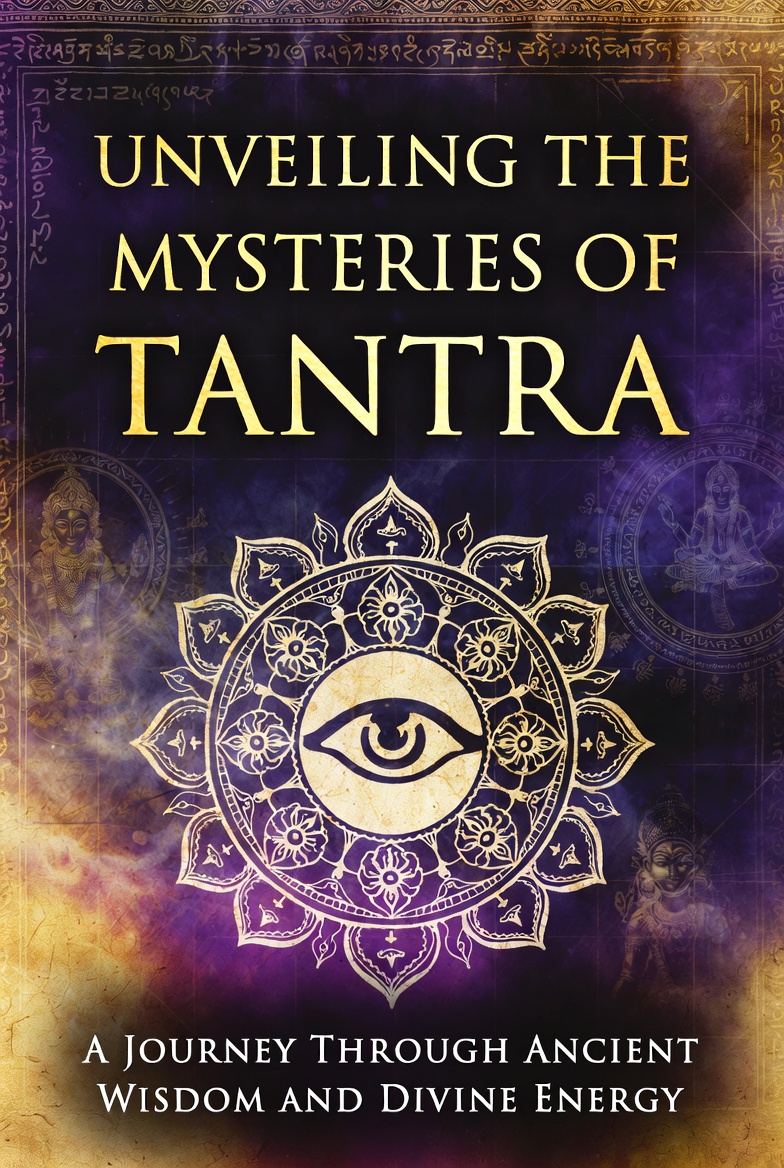
- Yantras and Mandalas: Sacred geometries like the Sri Yantra, a mesmerizing web of triangles symbolizing cosmic union. These aren’t just art; they’re meditative portals.
- Rituals and Worship: From gentle puja to intense sadhana, all aimed at liberation (moksha) and supernatural powers (siddhis).
Shakti reigns supreme here, embodied in fierce goddesses like Kali, who devours time and ego to reveal boundless bliss. It’s a philosophy that empowers women, honors the body, and turns ordinary acts into sacred rites.

Hindu vs. Buddhist Tantra: Two Sides of the Same Coin?
Tantra isn’t monolithic. In Hinduism, it spans dualistic schools like Shaiva Siddhanta, with temple rituals and guru lineages, to non-dual Kashmir Shaivism’s ecstatic freedom. Buddhist Tantra, or Vajrayana, adapts these for the path to Buddhahood, emphasizing deity yoga, mandalas, and stages of generation and completion. While Hindus might revere Shiva-Shakti couples, Buddhists visualize enlightened beings in union, borrowing from Shaiva traditions but focusing on emptiness and compassion.
Visualize a Tibetan mandala: a cosmic blueprint teeming with deities, guiding meditators to inner realms. Both traditions use analogy—inner fire mirrors outer rituals—to bridge the mundane and mystical.
Dispelling the Myths: Tantra Beyond the Bedroom
Ah, the elephant in the room: sex. Yes, Tantra includes maithuna as a advanced practice, but it’s symbolic, requiring purity and not for casual thrill-seekers. Forget Hollywood’s “Tantric sex”—true Tantra demands discipline, not indulgence. It’s neither anti-Vedic nor purely orthodox; it’s an independent stream that integrates diverse wisdom.
In our fast-paced world, Tantra’s relevance shines: it inspires yoga studios, therapy sessions, and art, reminding us that embodiment is enlightenment. Whether you’re meditating on a yantra or simply savoring a sunset, Tantra whispers: the divine is here, now, in you.
So, dear reader, are you ready to weave your own Tantric tapestry? Dive deeper, seek a teacher, and let the energy flow. The universe is waiting to dance with you.
The Illuminarium is calling you. Won’t you heed the call?
Dive into the planet’s most enchanting and actionable books, designed to supercharge your spiritual journey and reveal elite occult strategies for business success. Now, you too can rise as a prophet of profit, with instant downloads of transformative titles to build your ultimate life.

Leave a Reply