Imagine stepping back into the misty dawn of 15th-century Thailand, where the air hums with the chants of monks and the distant roar of mythical beasts. In the heart of Chiang Mai’s ancient old city, a hidden temple beckons like a forgotten legend—Wat Muen Toom, a sanctuary where history, myth, and devotion intertwine. Join me as we unravel its story, wandering through corridors of time guarded by serpents and lions, in a tale that begins with a soldier’s vow and echoes through royal rituals to this day.

The Soldier’s Oath: Founding a Temple Amidst Kingdom Shadows
In the year 1478, under the watchful gaze of King Mueang Kaeo of the Mengrai Dynasty, the Lanna Kingdom flourished like a lotus in the northern Thai highlands. But amid the splendor of teak palaces and bustling markets, a humble soldier named Muen Tum felt a divine calling. Gathering his family, kin, and villagers, he poured their collective spirit into building a temple—a beacon of piety against the uncertainties of war and fate. Wat Muen Toom rose from the earth, its name echoing “ten thousand” (muen) and perhaps the booming resonance of devotion (“toom”). Little did Muen Tum know, his creation would outlast empires, standing over five centuries as a testament to communal faith in Chiang Mai’s Phra Sing subdistrict.
As the Lanna realm expanded, the temple became more than stone and stucco; it wove into the fabric of royal life. Picture a newly crowned king, adorned in silk and gold, embarking on a sacred pilgrimage. In a three-step water purification ritual to banish misfortune and usher prosperity, the second act unfolded at Wat Muen Toom. Here, the monarch symbolically shed bad luck, bathing in blessed waters guarded by the temple’s mythical sentinels. This ceremony, steeped in ancient beliefs, linked the king’s fate to the cosmos, ensuring harmony for the kingdom. Through invasions, renovations—including a grand new gateway in 2019—and the march of time, Wat Muen Toom has endured, one of over 300 temples dotting Chiang Mai, whispering secrets of a bygone era.

Echoes of Myth: Guardians from the Himmapan Realm
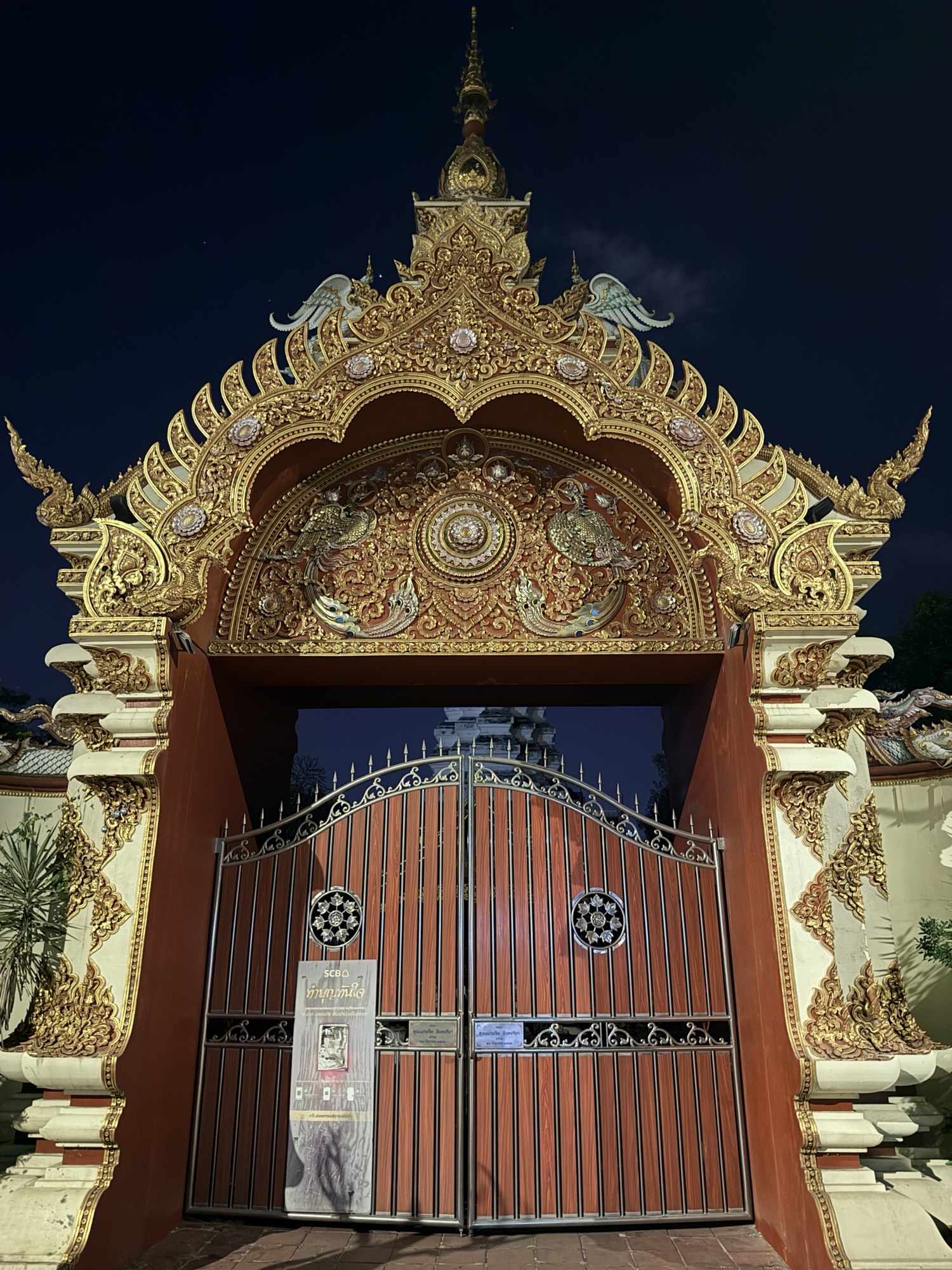
As you approach the temple’s west-facing entrance—a bold defiance of the traditional eastward gaze toward the rising sun—the air thickens with enchantment. The asymmetrical archway, alive with red and gold, is no mere doorway; it’s a portal to the Himmapan Forest, that legendary wilderness encircling Mount Meru in Hindu-Buddhist lore. Here, fantastical creatures stand eternal watch, their forms blending elements of earth, sky, and sea in a symphony of protection and symbolism.
Venture closer, and the Singha emerges first—a fierce mythical lion, its roar frozen in stucco, horns curving like crescent moons. Born from Hindu tales as Durga’s mighty steed, this guardian has prowled Lanna temples since the 13th century, its Burmese-style chinthe variants flanking viharns to repel evil spirits. Beside it coils the Naga, the serpent dragon of watery depths, its multi-headed form dripping with ancient power. Recall the legend of Mucalinda, who shielded the Buddha from a storm; since the 15th century, Nagas have guarded Thai stairways and roofs, embodying fertility and the wrath of rivers.
But the wonders deepen. Perched on multi-tiered roofs like protective wings are the Hongsa, swan-like celestial birds with scaled grace. From Brahma’s vehicle in Hindu epics, they symbolize purity and wisdom—separating milk from water as enlightenment pierces illusion—adorning Lanna sites since the 14th century. Nearby, the Mayura peacock fans its jeweled tail, a vision of beauty conquering vanity, drawn from Krishna’s lore and Jataka rebirth stories, integrated into Chiang Mai’s art by the 19th century.
Hybrids abound, fusing realms in mesmerizing defiance. The Elephant-Naga melds the elephant’s unyielding strength—echoing Airavata, Indra’s rain-bringing mount—with serpentine guardianship, a 13th-century Lanna staple warding chaos. Then there’s the Ghilen, a deer-lion enigma with antlers branching like fate’s twists, blending Chinese Qilin influences. In folklore, it lives a millennium, punishing the wicked and rewarding virtue, a medieval Thai temple fixture.
Graceful Kinnari glide among them—half-woman, half-bird or serpent, their lotus-holding poses evoking love’s harmony from Himmapan myths and Jataka romances, enchanting Chiang Mai since medieval days. Lesser-known allies join: Apsonsi, the half-woman half-lion of feminine wisdom; Devas, celestial beings on ubosot doors; and Thao Wessuwan, the north’s wealth guardian, battling demons in Ramakien epics. Together, they tie into the temple’s coronation rites, where kings left misfortune in their vigilant care.

Architectural Whispers: From Chedi Spires to Sacred Halls
Woven into this mythical tapestry is the temple’s Lanna architecture, a narrative in itself. The viharn’s split, steeply pitched roof mimics bird wings, crowned by chofa finials—eagle-like sentinels—and naga bargeboards undulating like waves. Burmese chinthe lions prowl its base, their gilt doors blooming with foliate motifs in red lacquer. The chedi rises slender and tall, its whitewashed stucco indented like steps to nirvana, topped by a square pinnacle of colored glass and gilt umbrella—a unique twist on the bell-shaped norm.
The ubosot stands modest, its plain walls and Deva-adorned doors listing donor names, a nod to Muen Tum’s communal legacy. A pavilion cradles a Buddha statue, often wreathed in red blooms, while a rear stupa encircles golden Phra Singh images—the “Lion Buddha” in regal pose. Dragons with saliva-dripping tongues and mirror-shimmering peacock tails frame the front wall, a theatrical facade that glows under night lanterns, inviting reflection on life’s impermanence.
A Timeless Invitation: Step Into the Legend Today
As our tale circles back to the present—December 26, 2025—Wat Muen Toom remains open from 5:00 AM to 9:00 PM, welcoming all with free entry. In Chiang Mai’s bustling old city, it’s a tranquil haven for contemplation, easily paired with nearby Wat Jed Lin. Whether you’re a wanderer tracing Lanna footsteps or a seeker of myths, this temple’s story endures: a soldier’s dream, kings’ rituals, and beasts’ eternal vigil. Venture there, and let the whispers of history enchant your soul.

Guardians of the Sacred: Unraveling the Myths Behind Wat Muen Toom’s Mythological Beasts
As we delve deeper into the enchanting world of Wat Muen Toom, the sculptures you captured reveal a tapestry of ancient lore, where each creature embodies profound symbols from Thai, Lanna, Hindu, and Buddhist traditions. These beings, drawn from the mythical Himmapan Forest—a legendary realm surrounding Mount Meru—serve as protectors, harbingers of prosperity, and bridges between the earthly and divine. Below, I’ll explore each mythological animal from your photos in detail, tracing their origins, key legends, and symbolic significance, weaving in stories that have echoed through centuries of Southeast Asian folklore.

The Hongsa: Celestial Swan of Wisdom and Purity
In your first and sixth photos, the turquoise and white bird-like figures with elegant, curved necks, scaled bodies, and flowing wings represent the Hongsa (also spelled Hamsa), a mythical swan-goose hybrid revered in Thai Lanna culture. Originating from ancient Hindu mythology as the divine vehicle (vahana) of Brahma, the creator god, the Hongsa symbolizes ultimate discernment and spiritual transcendence—it can separate milk from water, mirroring the enlightened mind’s ability to distinguish truth from illusion. In Thai folklore, particularly in the Himmapan tales, the Hongsa inhabits enchanted forests and skies, often depicted in temple murals and sculptures since the 14th century Lanna period.
A prominent legend ties the Hongsa to Buddhist narratives, where it appears as a symbol of purity in the Jataka tales of the Buddha’s past lives. One story recounts a golden Hongsa king who sacrifices his feathers to aid the needy, embodying selflessness and karma. In Lanna temples like Wat Muen Toom, Hongsa finials adorn roofs to invoke protection from storms and spiritual elevation, reflecting beliefs in its role as a messenger between realms. Its graceful form also signifies harmony with nature, often linked to rain and fertility in animist traditions blended with Buddhism.

The Mayura: Peacock of Beauty and Immortal Conquest
Your second and fifth images showcase the elaborate peacock-like birds with jeweled tails, fanned feathers, and scaled bodies—the Mayura, a sacred emblem in Thai Buddhist art. Rooted in Hindu mythology, the Mayura is the vahana of gods like Kartikeya (god of war) and Krishna, born from Garuda’s feathers, symbolizing royalty, immortality, and the conquest of vanity—its dazzling display reminds devotees of the fleeting nature of ego. In Buddhist contexts, it represents compassion and purity, as peacocks are said to thrive on poison, transforming negativity into beauty.
A key Jataka tale, the Mora Jataka, features a golden peacock king who chants protective mantras to evade hunters for 7,000 years, only to be captured when desire clouds his virtue—teaching the perils of attachment. In Thai temples, Mayura motifs shimmer on walls and pedestals since the 19th century, often in mirror work to evoke enlightenment’s all-seeing eye. At Wat Muen Toom, they add allure to the facade, symbolizing prosperity and the dance of renewal, especially during monsoons when peacocks herald rain.

The Singha: Fierce Lion Sentinel of Power
The third, seventh, and tenth photos depict winged or horned lion-like guardians with roaring mouths and ornate manes—the Singha, a mythical lion central to Thai architecture and folklore. Originating from Sanskrit “Simha” in Hindu lore as the vahana of Durga, the Singha evolved in Thai mythology into a half-man, half-lion hybrid symbolizing strength, courage, and royal authority. Influenced by Burmese chinthe and Chinese guardian lions, it guards temple entrances since the 13th-century Mengrai Dynasty, warding off evil with its vigilant gaze.
In legends, the Singha is a loyal protector; one tale from Thai folklore describes it as a divine beast that roars to summon thunder, aiding kings in battle. At Wat Muen Toom, these statues flank the viharn, embodying justice and perseverance, often paired with cubs to represent nurturing power. Horned variants blend with deer motifs, amplifying its role as a punisher of the wicked in Himmapan stories.

The Naga: Serpent Dragon of Waters and Protection
Your fourth photo captures the female serpent deity with a coiled tail and lotus-holding pose—a manifestation of the Naga, the iconic serpent dragon in Thai mythology. Derived from ancient Hindu and Buddhist roots, Nagas are shape-shifting beings of the underworld, symbolizing water, fertility, and guardianship—capable of human form or multi-headed serpents. In Thailand, they’re national symbols of prosperity, revered since prehistoric times in Mekong River lore.
The classic legend is of Mucalinda, a Naga king who coiled around the meditating Buddha, spreading his hoods as an umbrella during a storm—illustrating benevolent protection. Female Nagas, or Nagini, embody grace and fertility; in Thai tales, they transform to marry humans, but betrayal unleashes floods. At temples like Wat Muen Toom, Nagas line stairways since the 15th century, linking to coronation rituals where they aid in purifying misfortune.

The Kinnari: Melodious Half-Woman, Half-Bird Enchantress
In the eighth photo, the graceful female figure with a serpentine tail (bird-like in lore) is the Kinnari, a celestial hybrid from Thai Himmapan myths. Originating in Hindu-Buddhist folklore, Kinnari (feminine of Kinnara) are half-woman, half-bird beings with angelic costumes, wings, and tails, serving as musicians in Indra’s court. They symbolize love, beauty, and harmony, often flying between realms in medieval Thai art.
A beloved Jataka tale tells of a Kinnari princess who falls in love with a human prince; separated by jealousy, their reunion teaches devotion and forgiveness. In Lanna temples, Kinnari statues evoke celestial music, guarding sacred spaces since ancient times, blending bird freedom with human emotion.

The Elephant-Naga Hybrid: Fusion of Earthly Might and Aquatic Guard
Your ninth image shows the elephant-headed serpent with a coiled body—the Elephant-Naga hybrid, a unique Lanna temple motif. Blending the Naga’s watery essence with the elephant’s strength, it draws from Hindu Airavata (Indra’s elephant vahana) and Thai animist beliefs, symbolizing harmony between land and water since the 13th century.
In folklore, such hybrids guard underworld treasures; one legend describes them as rain-bringers, trumpeting to summon monsoons. At Wat Muen Toom and nearby Chiang Yeun, they back entrances, repelling chaos and invoking fertility.

The Ghilen: Deer-Lion Arbiter of Virtue
The seventh and tenth photos feature the antlered lion hybrids—the Ghilen (Thai variant of Qilin), a Himmapan creature of justice. Originating from Chinese Qilin mythology, it adapted in Thai lore as a scaly lion with deer antlers, living 1,000 years to punish the wicked and reward the virtuous. In medieval Thai tales, Ghilen appears during auspicious reigns, symbolizing moral balance.
A story recounts a Ghilen revealing a tyrant’s crimes by goring him with antlers, restoring harmony. In Lanna art since Rama III’s era, they guard temples like Wat Muen Toom, blending lion ferocity with deer grace.
These creatures not only adorn Wat Muen Toom but breathe life into its spiritual narrative, inviting reflection on ancient wisdom.
Did you know you can now unlock the Illuminarium Mystica Library?
Dive into the planet’s most enchanting and actionable books, designed to supercharge your spiritual journey and reveal elite occult strategies for business success. Now, you too can rise as a prophet of profit, with instant downloads of transformative titles to build your ultimate life.

Leave a Reply