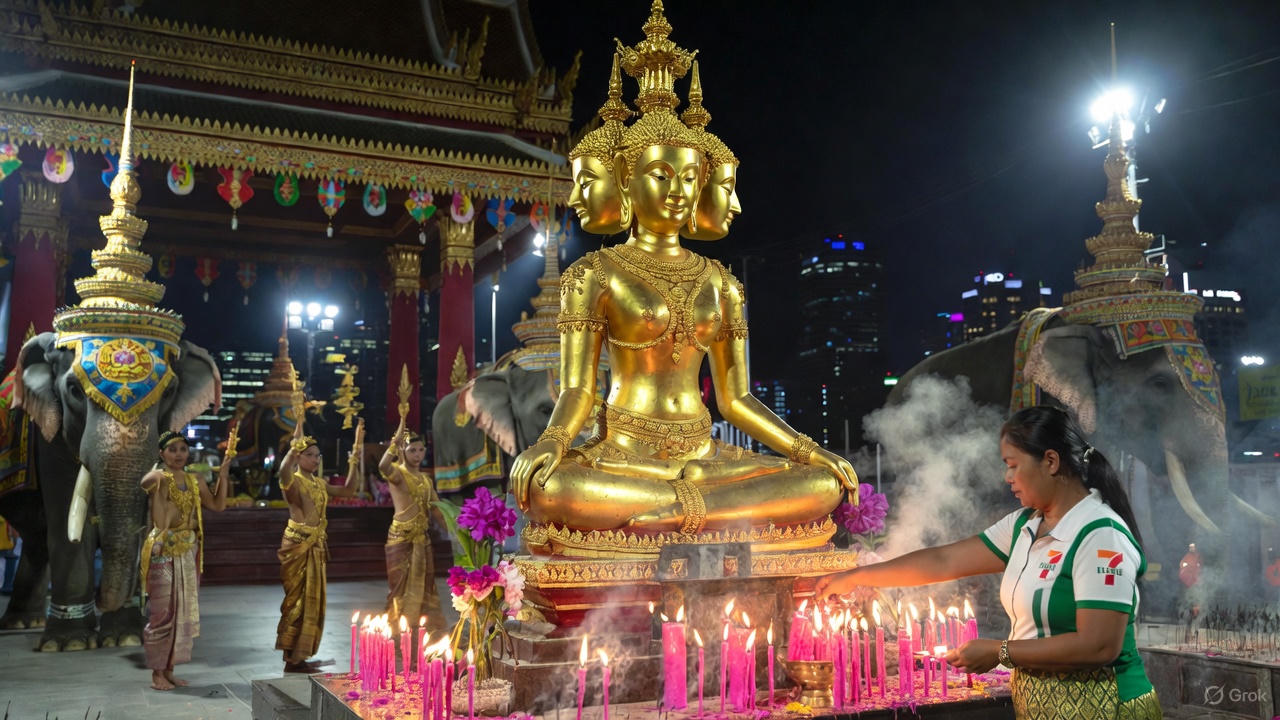
In the vibrant tapestry of Thailand’s spiritual landscape, where golden temples shimmer under the tropical sun and monks in saffron robes chant ancient sutras, an unexpected figure holds court—a four-faced Hindu god named Thao Maha Brahma, or Phra Phrom as he’s affectionately known. This isn’t just a quirky footnote in religious history; it’s a profound cultural phenomenon that reveals the soul of Thai society. While 95% of Thais devoutly follow Theravada Buddhism, with its emphasis on enlightenment and detachment, Brahma thrives as the go-to deity for the gritty realities of daily life, from sealing business deals to mending broken hearts.
Some of the herbal allies mentioned here are shared through affiliate links, meaning I may receive a small blessing of support if you choose to journey with them—always at no extra cost to you.

Since discovering Kundalini Awakening Herbal Supplement, my life has completely transformed—I am utterly obsessed and honestly cannot imagine living without it.
Every night it gives me the deepest, most restorative sleep of my life, yet I wake up exploding with crystal-clear mental clarity and razor-sharp focus, needing far less sleep to feel unstoppable. My creativity is on fire, meditation drops me straight “into the zone” like never before, and my awareness and consciousness have skyrocketed—vivid, prophetic dreams, heightened senses, pure presence.
When sickness hits, it knocks it out overnight. Energy surges endlessly, blood flows better, toxins vanish, even my old negative habits just melt away.
This Ashwagandha-Bacopa-Tulsi-Haritaki blend didn’t just support my spiritual growth—it ignited a full Kundalini awakening. I’m alive in ways I never knew possible. This is my holy grail. I’m never letting it go. 👉 Get Yours on Amazon Here
Picture this: a kingdom steeped in Buddhist traditions, yet pulsating with shrines dedicated to a creator god from another faith, drawing crowds that rival the most sacred Buddhist sites. The Erawan Shrine in Bangkok, his most famous abode, pulls in over 100,000 visitors each month, outshining even iconic temples like Wat Pho on bustling days. So, how did this Hindu interloper become the unofficial patron of Thai ambition, weaving himself into the fabric of a predominantly Buddhist culture? It’s a story of spiritual pragmatism, where ancient gods adapt to modern desires, and devotion becomes a savvy transaction in the marketplace of miracles.

The Great Spiritual Bargain: Why Brahma Outshines Buddha in Everyday Thai Life
At the core of this paradox lies a fundamental divide in spiritual philosophies that Thais navigate with effortless grace, turning what might seem like a contradiction into a harmonious balance. Buddhism, with its profound teachings on impermanence and the cessation of suffering through detachment, offers a path to ultimate peace and nirvana, often promising rewards in future lives rather than immediate gratification. It’s a philosophy of meditation, merit-making, and letting go, where good deeds accumulate like quiet investments for the soul. In contrast, Brahma operates like a cosmic dealmaker, inviting devotees to articulate their desires—be it wealth, love, revenge, or acing that crucial exam—and delivering results on a timeline that fits the fast-paced rhythm of contemporary life, sometimes as swiftly as the next week.
This transactional approach resonates deeply in a culture that values both inner harmony and outward success, allowing Thais to compartmentalize their spiritual needs: merit-making at the temple on weekends for long-term karma, but a quick detour to the Erawan Shrine on Monday morning to ensure that job interview goes smoothly. It’s not hypocrisy but a brilliant form of spiritual multitasking, where Buddha handles the profound questions of existence, and Brahma tackles the urgent demands of survival and aspiration. This division of labor extends beyond philosophy into practical rituals—while Buddhist practices emphasize introspection and non-attachment, Brahma’s worship involves vibrant offerings like dancers, pineapples, and coconuts, turning prayer into a festive negotiation that aligns perfectly with Thai sensibilities of fun and comfort.
Shrines in Every Shadow: Brahma’s Ubiquitous Presence in Thai Daily Rituals
Venture into any corner of Thailand, from the gleaming skyscrapers of Bangkok to the humble roadside stalls in rural villages, and you’ll encounter the pervasive influence of Brahma through the ubiquitous spirit houses known as san phra phum, miniature shrines that dot the landscape like spiritual sentinels. In an astonishing 80% of these structures, Phra Phrom takes center stage, his four-faced statue offering comprehensive protection that leaves no angle unguarded, making him the ideal guardian for properties on busy intersections or vulnerable plots. What draws people to install him so frequently isn’t just his protective aura but his willingness to engage in what feels like polite bribery—offer a roasted pig or a garland of marigolds, and he’ll reciprocate with blessings tailored to your needs, a far cry from the more austere Buddhist figures who might decline such material gestures.
His golden, dramatic form also lends itself to aesthetic appeal, becoming a photogenic focal point that enhances business branding and draws positive energy, as evidenced by major corporations like the Central Group incorporating mini replicas of the Erawan Shrine into their malls, reportedly boosting sales by 15% post-installation. These spirit houses aren’t mere decorations; they’re active hubs of devotion where daily offerings of food, incense, and even soft drinks keep the spirits—and by extension, Brahma—content, ensuring harmony between the physical and metaphysical worlds in a country where animism blends seamlessly with imported faiths.

Kundalini Awakening Herbal Supplement is my god-tier addiction—Ashwagandha, Bacopa, Tulsi, Haritaki = pure ascension. 👉 Get Yours on Amazon Here
From Soap Operas to Sacred Ink: Brahma’s Grip on Thai Pop Culture and Traditions
Brahma’s dominance isn’t confined to physical shrines; he permeates Thai popular culture, infiltrating everything from blockbuster entertainment to personal body art, solidifying his status as a cultural icon. In the melodramatic world of lakorns, Thailand’s beloved soap operas, heroines often turn to the Erawan Shrine in pivotal scenes, praying fervently before exacting revenge on scheming antagonists or winning back lost loves, embedding Brahma in the collective narrative of triumph over adversity. This extends to music videos where hip-hop artists flaunt Brahma amulets amid stacks of cash, symbolizing divine endorsement of their hustle, and horror films that warn of dire consequences for desecrating his image, like possessions or curses that drive the plot in movies such as “The Promise” from 2017.
Even in the realm of sacred tattoos, known as Sak Yant, Brahma holds sway with intricate designs like the five-line Hah Taew mantra in Khmer script, often inked on the nape of the neck to invite protection from dark forces, enhanced charisma in dealings, and luck in romantic pursuits—tattoos sported by global celebrities like Angelina Jolie and Thai boxing legend Buakaw, as well as K-pop sensation Lisa from BLACKPINK, who was spotted paying homage at the shrine in 2023. This cultural infiltration highlights how Brahma has become a symbol of empowerment and resilience, resonating in a society that blends ancient mysticism with modern media.
The Shadow Side of Devotion: Brahma’s Neutral Stance on Vengeance and Dark Desires
Beneath the glittering surface of blessings and miracles lies a more shadowy aspect of Brahma worship, where the god’s neutrality allows for prayers that tread into morally ambiguous territory, offering a outlet for desires that Buddhism might discourage. Devotees can procure black incense from discreet vendors to curse rivals, or offer broken mirrors inverted to deflect misfortune back onto enemies, crafting vows of silence or promises of dark-hued roses in exchange for outcomes like job losses or romantic betrayals.
This flexibility stems from Brahma’s non-judgmental ethos—he’s not bound by strict karmic lectures but operates as a impartial arbiter, granting requests with a touch of divine humor, as illustrated in a 2021 Bangkok Post story of a scorned wife who prayed for her husband’s mistress to vanish, only for the woman to win the lottery and relocate to Switzerland, prompting the wife to demand a spiritual refund amid the amusement of onlookers. Such tales underscore Brahma’s appeal in a world where not all wishes are pure, providing a culturally sanctioned space for venting frustrations without the weight of eternal consequences, all while maintaining the facade of benevolent devotion.
Royal Endorsements and Global Ripples: Brahma’s Path to Universal Appeal
The god’s legitimacy in Thailand receives an unspoken seal from the highest echelons, with the monarchy—staunch protectors of Buddhist orthodoxy—quietly acknowledging his power through historic visits and annual tributes. King Rama IX, the revered Bhumibol, made a pilgrimage to the Erawan Shrine in 1980, and royal garlands continue to arrive each November 9th on the shrine’s anniversary, while the Crown Property Bureau leases the land for a symbolic one baht per year, signaling that if the king deems it worthy, so does the nation.
This royal nod has propelled Brahma beyond Thai borders, inspiring shrines in far-flung locales like Singapore’s Tanglin Road, erected by Thai expatriates in the 1990s, or Hong Kong’s Causeway Bay, built on a tycoon’s wish for an heir, and even a clandestine altar in Las Vegas’s Caesar’s Palace for high-rollers seeking luck. The global spread is amplified by trends like Chinese tourists flocking to Erawan with red envelopes brimming with auspicious 999-baht notes, proving Brahma’s adaptability to diverse currencies and cultures, transforming him from a local deity into a viral sensation in the international spiritual arena.
Decoding the Winning Formula: Brahma’s Alignment with Core Thai Values
Ultimately, Brahma’s triumph in Thailand boils down to his perfect synergy with ingrained cultural values that prioritize joy, ease, and social savvy over rigid asceticism. In a society that cherishes sanuk—the pursuit of fun—he turns devotion into a spectacle of dancers, music, and drama, making prayer feel like a celebration rather than a solemn duty. His promise of sabai, or effortless comfort, delivers swift, no-strings-attached results without moral sermons, appealing to those navigating the complexities of modern life.
Status plays a role too, as being seen at prominent shrines like Erawan signals connections and ambition, while his forgiving nature aligns with the mai pen rai mindset of “no worries,” excusing lapsed vows with a bit of extra offering. Buddha may offer profound peace, but Brahma supplies the thrilling plot twists that keep life exciting, serving as the wildcard in Thailand’s spiritual deck—a god for when merit alone isn’t enough, embodying the hustle that complements the heart of Buddhist serenity.

It ignited my Kundalini. I’m reborn, unstoppable. Holy grail. I’d die without it. 👉 Get Yours on Amazon Here
A Personal Encounter with the Divine: Reflections from the Shrine’s Silent Hours
One humid night, I found myself at the Erawan Shrine well past midnight, the usual throngs dispersed, leaving only wisps of incense smoke curling like ethereal guardians in the air. An elderly woman, still in her 7-Eleven uniform after a long shift, approached with four pink candles, lighting them with trembling hands as she murmured in the melodic Isan dialect, vowing a pig’s head and a dozen dancers if her son passed his police exam. She bowed nine times, a ritual of completion, then turned to me with a knowing smile, confiding that Buddha guides her to goodness while Phra Phrom equips her to win life’s battles. As she vanished into the shadows, the candles danced in the breeze, and I imagined the four-faced god tallying her plea in his eternal ledger, a poignant reminder of how Thailand harmonizes its spiritual worlds.
Dare to Dream with the Four-Faced God: What Wish Will You Whisper?
So, the next time your travels lead you to Bangkok’s bustling streets, bypass the standard temple circuits and head straight to the iconic corner of Ratchadamri and Ploenchit, armed with four lotus buds and a heart full of desires. Face south and declare your wish with unwavering specificity—Brahma thrives on details, not ambiguities—and prepare for the possibility of transformation.
But heed this: when your prayer manifests, as it so often does in these tales of divine intervention, honor the bargain by returning with your promised tribute. The dancers are poised, the elephants stand ready, and those eternal faces are eternally vigilant. This, dear reader, is Thailand’s most tantalizing secret: Buddhism forms the compassionate core, but Brahma fuels the relentless drive, creating a cultural symphony where ancient gods and modern aspirations dance in perfect rhythm.
🔥 Ignite Your Curiosity: What Bold Request Would You Make to Thao Maha Brahma?
Share your most audacious wish in the comments below—the most captivating one earns a mystical virtual Sak Yant blessing straight from the deity’s realm. 🙏✨

YOU WILL THANK ME LATER! I PROMISE! 👉 Get Yours on Amazon Here
Leave a Reply