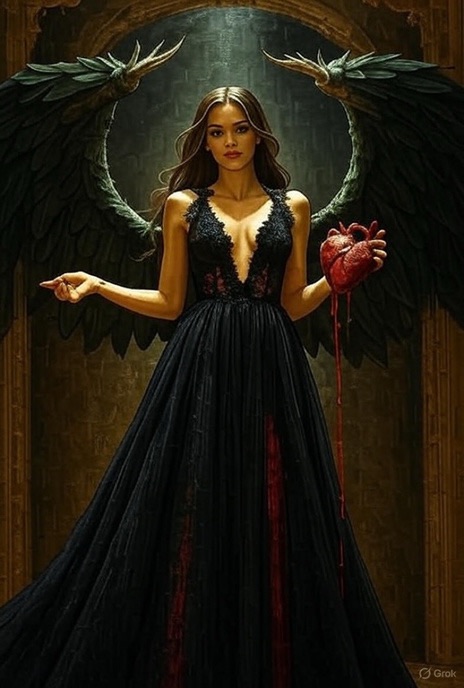
Lilith is a name that evokes mystery, rebellion, and power. Known in certain traditions as Adam’s first wife, a demoness, or a feminist icon, Lilith has captivated imaginations for centuries. From her ancient Mesopotamian roots to her modern reclamation as a symbol of female autonomy, Lilith’s story is a complex tapestry of myth, theology, and cultural evolution. This blog post explores Lilith’s origins, her transformation across time, and her profound influence on women’s identity, empowerment, and representation in society.

The Origins of Lilith: From Ancient Demons to Adam’s First Wife
Lilith’s story begins not in the Bible but in the ancient myths of Mesopotamia, where she appeared as part of a class of female demons called lilitu. These spirits were associated with storms, seduction, and harm to children and pregnant women. The lilitu were feared figures, often depicted as night-dwelling creatures who preyed on the vulnerable. This early imagery laid the foundation for Lilith’s later role in Jewish folklore.
The most well-known narrative about Lilith comes from the Alphabet of Ben Sira, a satirical Jewish text from the 8th–10th century CE. In this account, Lilith is created from the same earth as Adam, making her his equal, unlike Eve, who was fashioned from Adam’s rib. The text describes a conflict between Lilith and Adam over equality, particularly in matters of sexual dominance:
- Lilith refused to lie beneath Adam, insisting on their equality as co-creations.
- When Adam demanded her submission, Lilith invoked God’s ineffable name and fled the Garden of Eden.
- God sent three angels—Senoy, Sansenoy, and Semangelof—to retrieve her, but Lilith refused to return, choosing exile and a demonic fate over subjugation.
As punishment, Lilith was cast as a demoness, blamed for harming newborns and seducing men in their sleep. This story, though not part of the canonical Hebrew Bible, gained traction in Jewish mysticism, particularly in Kabbalistic texts like the Zohar (13th century), where Lilith is portrayed as a dark, seductive force opposing divine order.
While the Alphabet of Ben Sira may have been intended as satire, its portrayal of Lilith as a rebellious figure took on a life of its own, shaping her image in religious, cultural, and feminist contexts.

Lilith’s Evolution Across Cultures
Lilith’s story evolved as it spread across different traditions and eras, reflecting society’s changing views on women, power, and rebellion.
1. Medieval Judaism: The Dangerous Demoness
In medieval Jewish communities, Lilith became a figure of fear. She was believed to target pregnant women and infants, prompting the use of amulets inscribed with the names of the three angels to ward her off. Protective rituals and incantations were common, especially in Ashkenazi Jewish traditions. Lilith’s association with nocturnal emissions and seduction further cemented her as a symbol of uncontrolled female sexuality, a threat to patriarchal order.
2. Christian and Western Traditions: A Shadowy Presence
While Lilith is less prominent in Christian theology, her influence can be seen in medieval demonology and folklore. She merged with figures like succubi—demonic women who seduced men—and contributed to the archetype of the dangerous, independent woman. During the witch hunts of the early modern period, Lilith’s legacy indirectly fueled fears of women who defied societal norms, as such women were often labeled witches or heretics.
3. Modern Reclamation: Feminist Icon
By the 20th century, Lilith’s story was reinterpreted through a feminist lens. Her refusal to submit to Adam resonated with women advocating for equality and autonomy. Jewish feminist scholars, like those contributing to Lilith magazine (founded in 1976), embraced her as a symbol of resistance against patriarchal oppression. The Lilith Fair music festival (1997–1999), founded by Sarah McLachlan, celebrated women’s voices in music, drawing on Lilith’s legacy as a figure of defiance and creativity.
In modern spirituality, particularly in neo-pagan and Wiccan circles, Lilith is sometimes revered as a goddess of independence, inspiring rituals that honor female strength and self-determination.
Lilith’s Influence on Women: Empowerment and Controversy
Lilith’s story has profoundly shaped perceptions of women, both as a cautionary tale and as an empowering archetype. Her influence spans literature, art, spirituality, and feminist thought, reflecting the dual nature of her legacy: demonized rebel and liberated woman.
1. A Symbol of Female Autonomy and Rebellion
Lilith’s insistence on equality with Adam and her willingness to leave Eden rather than submit have made her a powerful symbol for feminist movements. Unlike Eve, often portrayed as submissive or culpable for humanity’s fall, Lilith represents the “unruly woman” who prioritizes her own agency. This resonates with women challenging traditional gender roles in areas like marriage, work, and sexuality.
- Feminist Literature and Art: Writers like Judith Plaskow (The Coming of Lilith, 1972) reimagined Lilith as a figure of sisterhood, uniting with Eve to resist patriarchal control. Artists like Dante Gabriel Rossetti (Lady Lilith, 1868) depicted her as a seductive yet powerful figure, blending beauty with defiance.
- Cultural Impact: Lilith’s story inspired the Lilith Fair and appears in modern media, from TV shows like True Blood to novels and video games, where she is portrayed as a complex character—sometimes villainous, sometimes heroic.
2. The Demonization of Female Power
In traditional narratives, Lilith’s independence was framed as dangerous, reinforcing negative stereotypes about women who defy societal norms. Her association with seduction, infertility, and harm to children painted powerful women as threats to family and social order. This legacy influenced medieval and early modern fears of witches and continues to echo in cultural attitudes that vilify assertive or sexually autonomous women.
For example, Lilith’s portrayal as a seductress tied her to narratives that control female sexuality, labeling women who express desire outside traditional boundaries as dangerous or immoral. This tension persists in modern debates about women’s reproductive rights and sexual freedom.
3. Psychological and Spiritual Resonance
In Jungian psychology, Lilith embodies the “dark feminine” or shadow archetype, representing repressed aspects of femininity like rage, independence, and sexuality. This perspective encourages women to embrace their full complexity rather than conforming to idealized roles like the nurturing mother or obedient wife.
In spiritual contexts, Lilith’s reclamation as a goddess figure in neo-paganism offers women a way to connect with their inner strength. Rituals invoking Lilith often focus on empowerment, self-assertion, and healing from patriarchal oppression.
4. Intersectional Perspectives
Lilith’s marginalization as a “demonic” figure resonates with women who face exclusion based on race, sexuality, or other identities. For some, her story parallels the struggles of women of color, queer women, or others who defy normative expectations, making her a symbol of intersectional resistance. However, her adoption in non-Jewish spiritual contexts has sparked debates about cultural appropriation, as her origins are deeply tied to Jewish mythology.
Lilith in Modern Culture
Lilith’s presence in contemporary culture is vast and varied, reflecting her versatility as a symbol:
- Literature: Authors like Toni Morrison and Octavia E. Butler have drawn on Lilith-like figures to explore themes of female power and marginalization.
- Visual Art: From Rossetti’s Pre-Raphaelite paintings to modern feminist art, Lilith is depicted as both alluring and defiant, challenging viewers to reconsider traditional notions of femininity.
- Pop Culture: Lilith appears in shows like Supernatural and Chilling Adventures of Sabrina, often as a powerful, morally ambiguous figure. In video games like Diablo, she is a central antagonist, blending her demonic and rebellious traits.
- Music: The Lilith Fair festival highlighted women’s contributions to music, reclaiming Lilith’s name as a celebration of creativity and independence.
Critiques and Controversies
Lilith’s story is not without its complexities and controversies:
- Historical Accuracy: Some scholars argue that the Alphabet of Ben Sira was a satirical text, not a historical account, and that Lilith’s role as Adam’s first wife is a later invention. This raises questions about her legitimacy in religious contexts.
- Misogynistic Roots: Traditional portrayals of Lilith as a demoness reinforce harmful stereotypes about women who challenge authority, complicating her feminist reclamation.
- Cultural Appropriation: The use of Lilith in non-Jewish spiritual practices has been criticized for divorcing her from her Jewish cultural and historical context, prompting calls for more respectful engagement with her story.
Why Lilith Matters Today
Lilith’s enduring relevance lies in her ability to embody the tension between societal expectations and individual freedom. Her story speaks to ongoing struggles for gender equality, reproductive rights, and freedom from gendered violence. As a symbol of resistance, she inspires women to question norms, assert their autonomy, and embrace their complexity.
In a world where women continue to navigate patriarchal structures, Lilith’s defiance serves as both a warning and a call to action. Her legacy challenges us to rethink narratives about women’s power, sexuality, and agency, encouraging a more inclusive and equitable future.
Lilith is more than a myth—she is a mirror reflecting society’s fears, desires, and aspirations for women. From her origins as a Mesopotamian demoness to her modern role as a feminist icon, Lilith has shaped how we understand female power and rebellion. Whether demonized or celebrated, she remains a potent symbol of the struggle for equality and the courage to defy oppression. As we continue to grapple with issues of gender and identity, Lilith’s story reminds us that true empowerment comes from embracing our full selves, even in the face of exile.
What are your thoughts on Lilith’s story? Do you see her as a villain, a hero, or something in between? Share your perspective in the comments below!
Did you know you can now unlock the Illuminarium Mystica Library?
Dive into the planet’s most enchanting and actionable books, designed to supercharge your spiritual journey and reveal elite occult strategies for business success. Now, you too can rise as a prophet of profit, with instant downloads of transformative titles to build your ultimate life.

Leave a Reply