
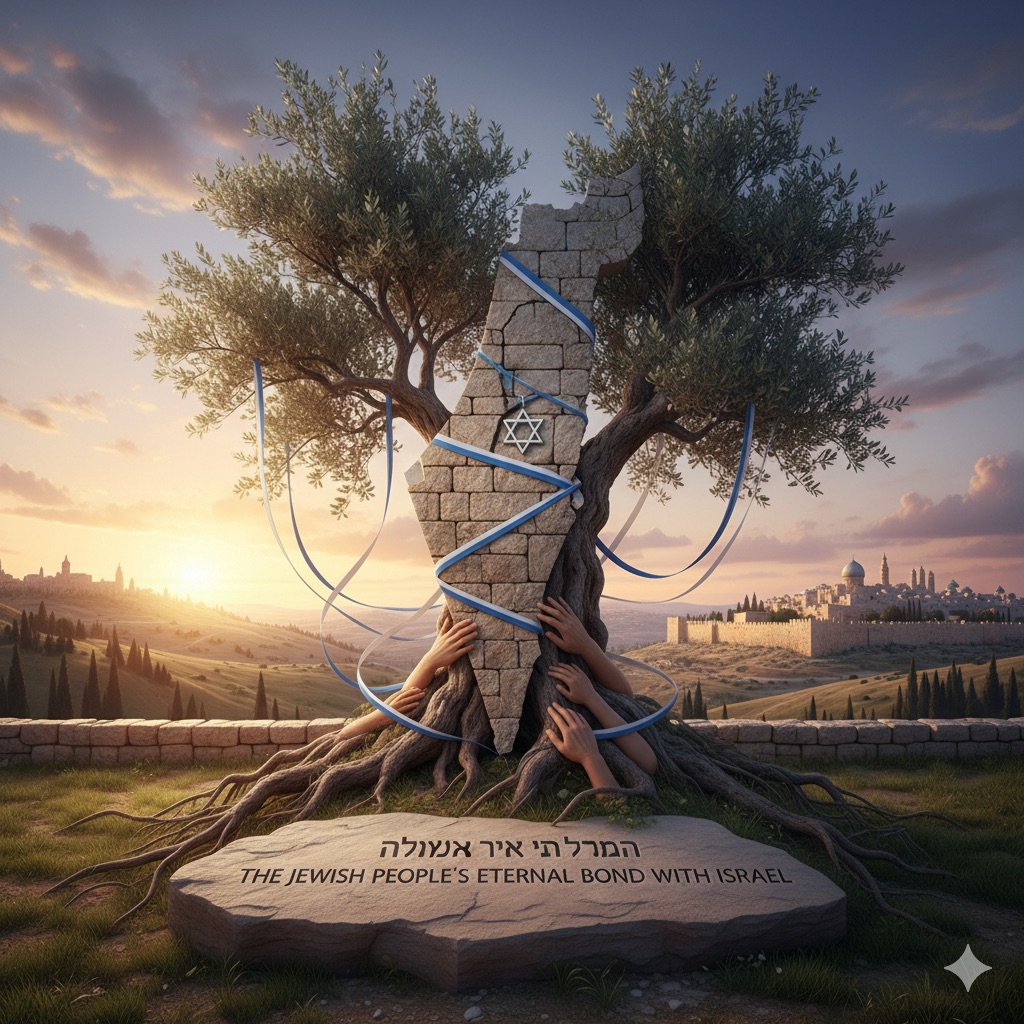
Imagine a promise so enduring that it spans millennia, surviving empires, exiles, and upheavals—a promise etched into ancient texts, whispered in prayers, and carried in the hearts of a scattered people. This is the prophecy of the Jewish return to the Land of Israel, a cornerstone of Jewish theology and identity that pulses through the Hebrew Bible, rabbinic wisdom, and ancient writings. From the Torah’s covenantal assurances to the poetic visions of prophets and the reflective musings of sages, the idea of returning to Zion is not just a historical event but a spiritual destiny. Let’s embark on a journey through these sacred texts and ideas, uncovering the timeless hope of a people called back to their homeland.

The Biblical Promise: A Covenant with the Land
At the heart of the Jewish connection to Israel lies the covenant God made with Abraham, Isaac, and Jacob, promising the Land of Israel as an everlasting inheritance. In Genesis 17:8, God declares to Abraham, “And I will give unto thee, and to thy seed after thee, the land of thy sojournings, all the land of Canaan, for an everlasting possession.” This covenant sets the stage for a narrative that unfolds across the Hebrew Bible (Tanakh), where the land is not just geography but a sacred trust.
The Torah’s Deuteronomy 30:1-5 offers one of the most stirring prophecies of return. After warning of exile due to disobedience, God promises: “The Lord thy God will turn thy captivity, and have compassion upon thee, and will return and gather thee from all the peoples, whither the Lord thy God hath scattered thee… And the Lord thy God will bring thee into the land which thy fathers possessed, and thou shalt possess it.” This passage is a beacon of hope, assuring the Jewish people that even in the darkest moments of dispersion, their story would lead back to Israel.
The prophets amplify this vision with vivid imagery. Isaiah 11:11-12 paints a picture of a divine hand reaching out a second time to gather “the remnant of His people” from Assyria, Egypt, and the “islands of the sea.” Jeremiah 31:7-10 sings of a joyful return from the “north country” and “the ends of the earth,” while Ezekiel 37:21-22, in the haunting Vision of the Dry Bones, foresees a national resurrection: “I will take the children of Israel from among the nations… and bring them into their own land.” These prophecies are not mere predictions; they are divine commitments, weaving the return to Israel into the fabric of redemption.
The Sages’ Reflections: Spiritual and Physical Homecoming
The rabbis of the Talmud and Midrash breathed new life into these biblical promises, interpreting them through the lens of faith and resilience. In Talmud Bavli, Megillah 29a, Rabbi Yitzhak envisions a future where even the synagogues and study halls of Babylonia—centers of Jewish life in exile—will be transplanted to Israel. This reflects a profound idea: the return is not just about people but about the spiritual essence of Judaism finding its home in Zion.
In Sanhedrin 98a, Rabbi Abba offers a tantalizing sign of redemption: “There is no clearer sign of the redemption than this: When the Land of Israel produces fruit in abundance.” This agricultural metaphor ties the physical restoration of the land to the spiritual renewal of the people, a theme echoed in Amos 9:14-15, where the prophet foresees the Jewish people rebuilding cities, planting vineyards, and remaining in their land “no more to be plucked up.”
The great sage Maimonides (Rambam), in his Mishneh Torah, Hilchot Melachim 11, codifies the messianic vision of return. He describes a future where the Messiah gathers the dispersed, rebuilds the Temple, and restores the kingdom in Israel. For Maimonides, the return is both a physical homecoming and a spiritual triumph, fulfilling the covenantal promise.
Ancient Voices: Echoes Beyond the Canon
Beyond the Tanakh and Talmud, other ancient Jewish texts enrich this narrative. The Book of Jubilees, a 2nd-century BCE apocryphal work, retells the covenant with Abraham, emphasizing the eternal bond with the land. The Dead Sea Scrolls, particularly the War Scroll (1QM), envision an eschatological restoration where the exiles return as part of a divine victory. Even Philo of Alexandria, a 1st-century Jewish philosopher, blends allegory and literalism in works like On the Life of Moses, affirming Israel as the spiritual and physical center of Jewish life.
The historian Josephus, in his Antiquities of the Jews, recounts the return from Babylonian exile under Cyrus the Great as a fulfillment of prophecy (e.g., Jeremiah 29:10). Yet he, too, hints at a greater future restoration, reflecting the persistent hope that the Jewish people’s story would culminate in Zion.
A Tapestry of Themes: Covenant, Repentance, and Redemption
The prophecy of return is woven with recurring themes that resonate across these texts:
- Covenantal Promise: The land is not just a place but a divine gift, tied to the eternal covenant with the patriarchs.
- Repentance and Redemption: Texts like Deuteronomy 30 and Maimonides’ writings link return to teshuvah (repentance), suggesting that spiritual renewal paves the way for physical restoration.
- Messianic Hope: The ingathering of exiles is often tied to the Messiah, who will lead the people back to a rebuilt Jerusalem and Temple (e.g., Ezekiel 37).
- Universal Vision: Prophets like Isaiah (2:2-4) see the return as part of a global redemption, where Israel’s restoration inspires the nations.
- Exile as Temporary: Rabbinic literature views galut (exile) as a passing phase, with the return to Israel as the ultimate destiny.
These themes create a narrative arc: exile is a trial, but return is inevitable, guided by divine fidelity and human faith.
From Prophecy to Reality: Historical and Modern Echoes
The prophecy of return has found echoes in history. The return from Babylonian exile in the 6th century BCE, chronicled in Ezra and Nehemiah, was seen as a partial fulfillment, yet sages like those in the Talmud anticipated a greater, final return. Fast forward to the 20th century, and the establishment of the State of Israel in 1948, coupled with the ingathering of Jewish communities from Europe, the Middle East, Africa, and beyond, has been hailed by many as a modern miracle. Religious Zionists point to verses like Amos 9:14-15—with its promise of rebuilding waste cities—as reflected in Israel’s flourishing cities and agriculture.
Yet debates persist: Is this the messianic redemption foretold by the prophets, or a step toward it? The tension between the spiritual and political dimensions of return continues to spark discussion among scholars, rabbis, and communities.
Why This Matters Today
The prophecy of return is more than an ancient promise; it’s a living hope that has sustained the Jewish people through centuries of dispersion. It speaks to the resilience of a people who, despite exile and persecution, never lost sight of Zion. The texts—whether the soaring poetry of Isaiah, the legal precision of Maimonides, or the mystical visions of the Dead Sea Scrolls—offer a timeless message: the Jewish people’s bond with Israel is unbreakable, rooted in faith, history, and divine promise.
For those intrigued by this topic, dive into the primary sources: the Tanakh (try the ArtScroll or JPS translations), the Talmud (Soncino or Steinsaltz editions), or Maimonides’ Mishneh Torah. Each page is a portal to a story of longing, faith, and homecoming. Whether you see the return as a historical event, a spiritual metaphor, or an unfolding reality, it remains one of the most compelling narratives in human history—a testament to a people’s enduring dream of Zion.
What are your thoughts on this prophecy? Have you explored these texts or seen their echoes in modern times? Share your reflections, and let’s continue the conversation!
Did you know you can now unlock the Illuminarium Mystica Library?
Dive into the planet’s most enchanting and actionable books, designed to supercharge your spiritual journey and reveal elite occult strategies for business success. Now, you too can rise as a prophet of profit, with instant downloads of transformative titles to build your ultimate life.

Leave a Reply