
Some of the herbal allies mentioned here are shared through affiliate links, meaning I may receive a small blessing of support if you choose to journey with them—always at no extra cost to you.

✨ The Battlefield Within: Where Dharma Meets Destiny
The Bhagavad Gita, often called The Song of God, is far more than a religious scripture — it is a manual for the human soul caught in the crossfire of existence. Set upon the sacred plains of Kurukshetra, the text opens not in a temple, but on a battlefield — a fitting metaphor for the spiritual struggle within every being.
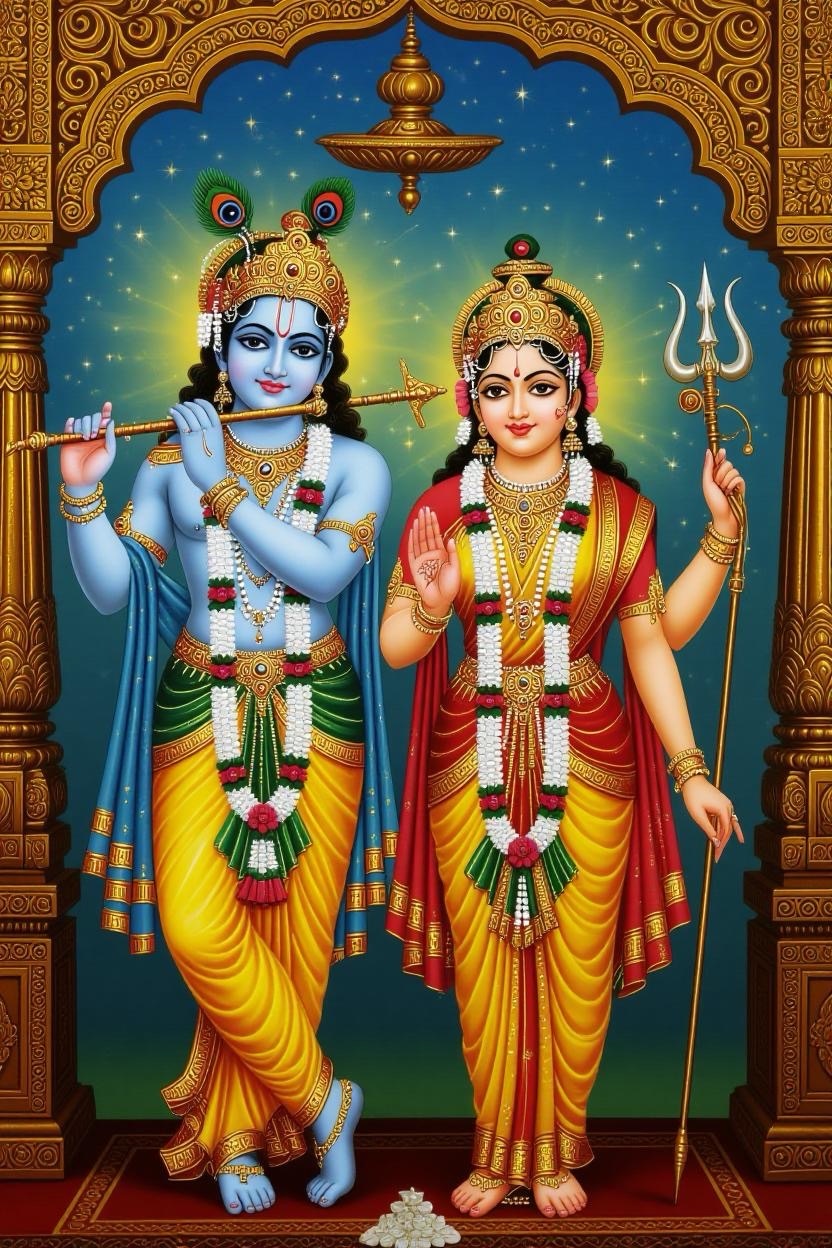
Here stands Arjuna, the noble warrior, paralyzed by doubt and despair as he faces his own kin in war. Opposite him is Krishna, his charioteer — who, in truth, is none other than the Supreme Consciousness itself. Their dialogue, framed within the trembling stillness before war, becomes the greatest discourse on consciousness, duty, and liberation ever recorded.
“You have the right to action, but never to its fruits. Let not the fruits of action be your motive, nor let your attachment be to inaction.”
— Bhagavad Gita 2:47
With these thunderous words, Krishna pierces the heart of human confusion. The Gita is not merely a call to arms — it is a call to awaken. Every human being stands upon their own Kurukshetra, where inner duty (dharma) and worldly attachments collide. The true battle is not between men, but between illusion and awakening — between the transient self and the eternal Self.

🌞 The Divine Science of Action: Karma as Conscious Alchemy
At the core of Krishna’s teaching lies the mystery of karma yoga — the path of selfless action. To act without attachment, to labor without desire for reward, is to transmute ordinary work into spiritual gold. Action, when surrendered, becomes meditation in motion.
The Gita invites us to see every moment as sacred. The farmer tending the soil, the mother raising her child, the artist shaping light from chaos — all can become vehicles of divine expression when the ego dissolves. “Whatever you do, whatever you eat, whatever you offer or give away, and whatever austerities you perform — do that, O son of Kunti, as an offering to Me.” (Gita 9:27)
In this light, every human act becomes ritual fire. Our work becomes worship; our breath, prayer. The ancient alchemists spoke of turning lead into gold — the Gita reveals that this alchemy happens not in the crucible, but in the consciousness. When one acts with detachment and devotion, the dull metal of ordinary life becomes the shining gold of divine awareness.
🌀 The Yoga of the Supreme: Union Beyond Duality
To truly enter the Gita is to step beyond the dualistic mind. The text reveals that God is not elsewhere — not in the heavens, not confined to temples — but immanent in every heart, pulse, and atom. The Gita’s great revelation is unity: the oneness between self and source.
In Chapter 11, Arjuna beholds the Vishvarupa, the Universal Form of Krishna — the divine vision that encompasses all birth and death, all galaxies and souls, within one radiant being. Arjuna trembles as he witnesses this cosmic tapestry — an infinite multiplicity emerging from one consciousness. “Behold, O Arjuna, all the warriors assembled here… they are already slain by Me. You are merely the instrument.” (Gita 11:33)
This is not fatalism, but freedom from illusion. The enlightened see that the play of creation and destruction moves through the Divine Will alone. The wise do not cling to the results of the cosmic play — they become its conscious participants. In surrendering to the infinite, they discover true independence.
🔥 The Inner Revolution: Awakening the Divine Warrior
The Gita is not a text to be studied merely with the intellect — it is to be lived. It is a spiritual mirror that reveals the battlefield inside each of us: the war between light and shadow, faith and fear, surrender and control.
Arjuna’s hesitation mirrors our own paralysis before life’s duties. How often do we shrink from our divine assignments, lost in self-doubt or false compassion? Krishna’s guidance — to act with devotion, without attachment to outcome — is the formula for awakening the Divine Warrior within.
In today’s age of distraction and despair, the Gita calls to us louder than ever. It asks: Who drives your chariot — the ego or the eternal? The answer determines the course of your destiny.

🌺 The Still Point of Eternity: Becoming One with the Infinite
In its final chapters, the Bhagavad Gita transcends philosophy and blossoms into pure mysticism. Krishna reveals the essence of liberation (moksha): to dwell in the Self that neither acts nor refrains from action, the silent witness behind all motion.
“When meditation is mastered, the mind is unwavering like the flame of a lamp in a windless place.” (Gita 6:19)
Here, the Gita becomes a meditation manual — a guide not to escape the world, but to find stillness within it. Through devotion (bhakti), knowledge (jnana), and discipline (yoga), one transcends the cycle of birth and death and merges into the infinite silence from which all things arise.
The Gita’s final gift is the realization that you are both Arjuna and Krishna — both seeker and source, human and divine. The battlefield is not a place, but a process — a constant purification of consciousness until only light remains.
⚡ Conclusion: The Eternal Song Still Sings
Over 2,000 years after it was spoken, the Bhagavad Gita still vibrates with the pulse of universal truth. It is not a relic — it is alive, electric with divine intelligence. Its message burns through time: act with love, surrender the fruits, and know yourself as the eternal witness behind all forms.
In the words of Krishna:
“Abandon all varieties of religion and simply surrender unto Me. I shall deliver you from all sinful reactions. Do not fear.” (Gita 18:66)
To read the Gita is to remember that the universe itself is conscious — and that every soul, like Arjuna, is destined to awaken to the truth: You were never the warrior alone. You were always the Divine driving the chariot.

Get yours on Amazon
Leave a Reply