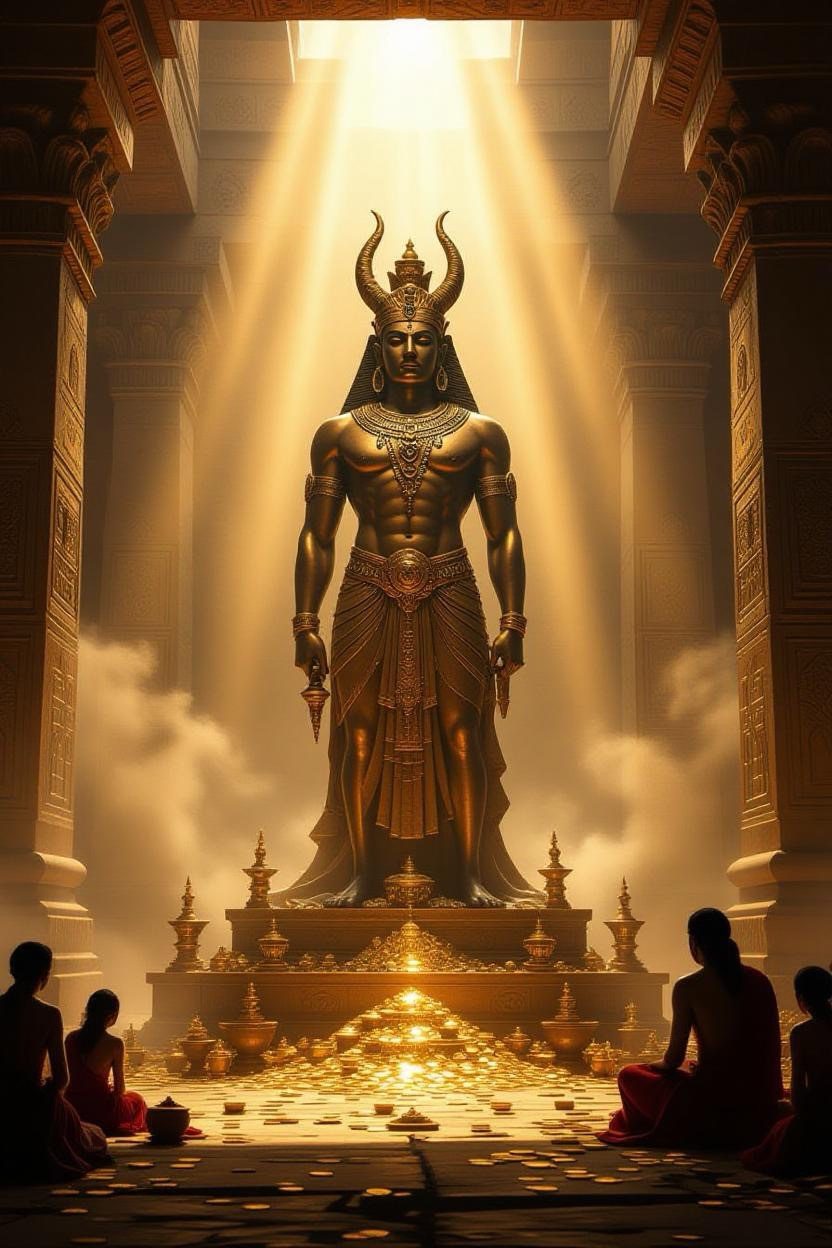
Throughout the ages, the mythic name Baal has carried both awe and warning. In the ancient world, Baal represented fertility, rain, and prosperity — the forces that sustain life. Yet in the sacred texts of Israel, Baal also came to embody the shadow side of worship: the temptation to turn one’s heart toward worldly gain rather than divine truth. When the prophets condemned Baal worship, they weren’t only condemning idol statues; they were exposing a deeper human tendency — the eternal urge to deify power, pleasure, and material success.
Today, that same spirit walks among us under different names. Humanity may no longer bow to golden calves or burn incense to storm gods, but we sacrifice to the same principles. We glorify the market, the machine, the empire, the celebrity, and the self. In every boardroom built upon exploitation, in every political system that prizes dominance over compassion, we witness the return of Baal — not as an ancient deity, but as an archetype of spiritual corruption.

The Archetype of Baal: Lord of the Worldly Realm
In Hebrew scripture, Baal was the rival of the living God — a symbol of the human inclination to worship what can be seen, touched, and traded. He was the “lord” of rain, crops, and gold — the promise of abundance without surrender. Baal appealed to the senses; Yahweh called for the heart. This contrast remains humanity’s inner conflict: the battle between possession and presence, ego and essence, control and communion.
Carl Jung would later describe this as the war between the Self and the Shadow — the psyche’s higher calling versus its hunger for dominance. When we lose touch with the divine within, the Baal-energy fills the void, whispering that satisfaction lies in acquisition and supremacy. This energy is not confined to one temple or tribe; it is a universal temptation that has manifested in every civilization, from Babylon to Rome to our own digital empires.
Modern Idolatry: Baal in the Age of Technology and Consumption
If the ancients sacrificed children to Baal, we sacrifice time, peace, and authenticity to the same invisible forces. We offer up our attention to glowing screens, our creativity to algorithms, our ecosystems to extraction. The modern idols are built of data and profit rather than bronze, yet the ritual is the same: humanity offers its spirit in exchange for fleeting comfort and control.
In economic systems that value growth over harmony, we can discern the ancient pattern of Baal worship — a ritual of endless taking, fueled by fear of scarcity. In political power struggles, we see the desire to “be as gods,” commanding life and death through policy, warfare, and propaganda. The Baal archetype thrives wherever empathy is dismissed as weakness and the soul’s worth is measured by numbers.

Beelzebub and the Inner Inversion of Worship
Beelzebub, often translated as “Lord of the Flies,” is a later echo of Baal — a spirit of decay born when worship turns inward, when the sacred is consumed by pride. The flies represent the restless mind swarming around the carcass of truth. When humanity feeds upon its own creations rather than divine inspiration, Beelzebub reigns. This inversion of worship can occur in a single person or an entire civilization. It is not a punishment from without, but the natural consequence of forgetting the Source.
Redeeming the Human Temple
The prophets of old called their people not merely to abandon idols but to purify the heart — to remember that the true temple is consciousness itself. The cure for Baal worship, ancient or modern, is not destruction but remembrance: to realign one’s will with the divine current of love and life. When compassion and truth regain their thrones within us, the false gods lose their dominion.
Each individual who awakens to this truth becomes a living act of resistance against the Baal-current of the age. To choose peace over profit, stillness over stimulation, and faith over fear is to dismantle the altar of greed stone by stone. The revolution against Baal is not fought with weapons or ideologies; it is waged in the silence of one’s soul.
Conclusion: The Eternal Struggle and the Path Forward
Humanity stands once more at the crossroads that ancient Israel knew so well. One path leads toward spiritual sovereignty — the remembrance of unity with the divine — and the other toward the glittering seductions of worldly power. The choice is ancient, yet ever new.
To “struggle with God,” as Israel’s name signifies, is to wrestle with the Baal within — to face the seductive shadow that promises control but delivers separation. This inner battle defines the destiny of our species. Every generation must decide whom it will serve: the fleeting gods of matter, or the timeless breath of Spirit.
Did you know you can now unlock the Illuminarium Mystica Library?
Dive into the planet’s most enchanting and actionable books, designed to supercharge your spiritual journey and reveal elite occult strategies for business success. Now, you too can rise as a prophet of profit, with instant downloads of transformative titles to build your ultimate life.

Leave a Reply