
Some of the herbal allies mentioned here are shared through affiliate links, meaning I may receive a small blessing of support if you choose to journey with them—always at no extra cost to you.

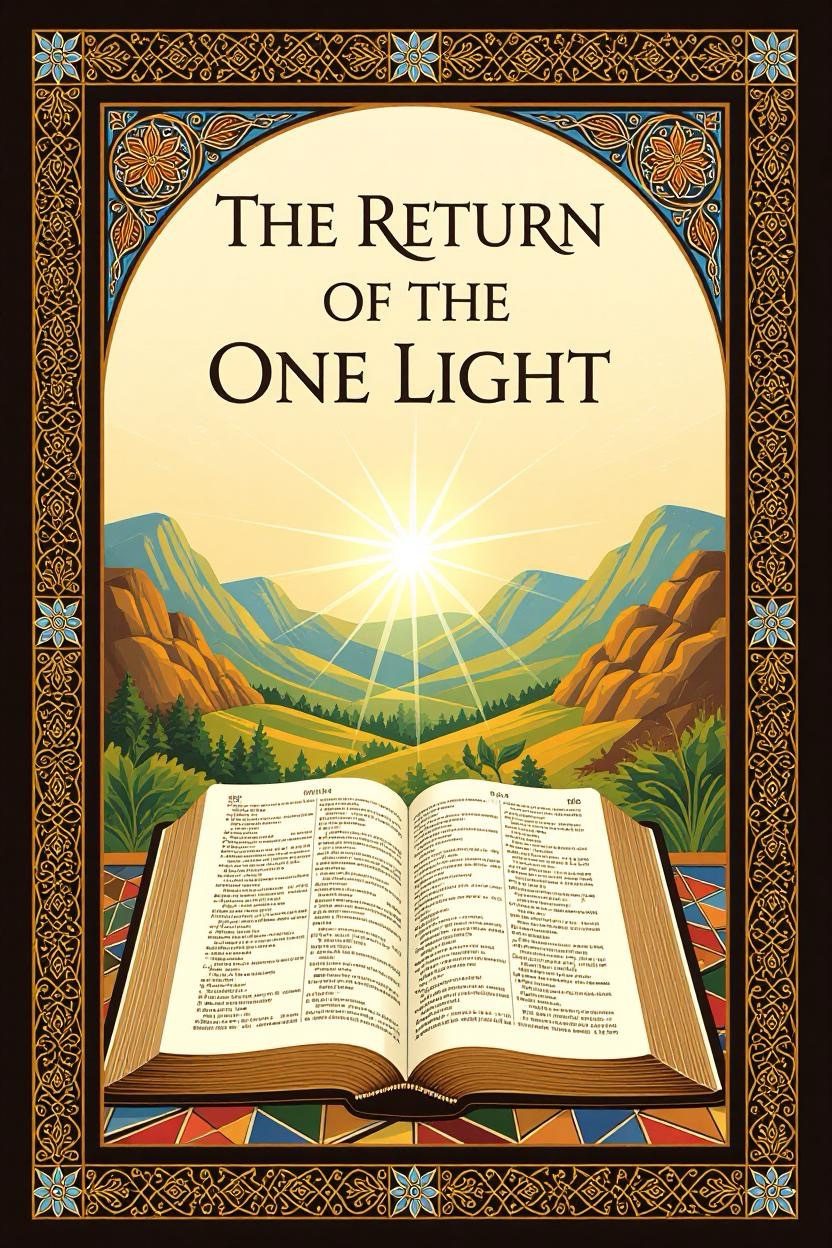
Across the long corridors of time, wisdom has circled the earth like the sun itself—rising in one land, setting in another, and returning in a new dawn. In our age of accelerated change, many feel that we stand at such a sunrise again: a moment when the ancient lights that once burned in Ethiopia, Egypt, and India begin to glow through modern eyes. To read the Ethiopian Holy Bible today is therefore not an antiquarian exercise but a living dialogue between past and present, scripture and science, revelation and experience.
The heart of its message has always been oneness. The word Tewahedo—the unity of divine and human, heaven and earth—speaks directly to the fragmented spirit of the modern world. Where our culture divides body and soul, matter and meaning, sacred and secular, the Ethiopian vision remembers that the world is woven of a single cloth. Every element of creation, from the mountain to the molecule, vibrates with the same creative Word that spoke the universe into being. To live Tewahedo is to live in awareness that all things are connected, that every action and thought ripples through the whole.
For the modern seeker, this teaching becomes practical spirituality rather than abstraction. The Ethiopian monastic disciplines—fasting, chanting, rhythm, breath—reappear in contemporary language as mindfulness, sound healing, and conscious living. The Hermetic maxim as above, so below becomes the holistic view that the microcosm of the human body reflects the macrocosm of nature. The yogic ascent through seven centers becomes a map of emotional and energetic maturity. Different vocabularies, one experience: awakening from fragmentation into wholeness.

Even science, when viewed through this lens, begins to echo the same revelation. Quantum fields interweave like the luminous threads described by Enoch; genetic codes spiral like the geometries carved in Lalibela’s stone. The material and the mystical are no longer opposites but partners in discovery. In that sense, the Ethiopian Bible is prophetic not only of the past but of the future—a future in which knowledge and reverence walk hand in hand.
Yet the transformation it calls for is inward first. The true temple is the heart, the true Ark the conscience that holds divine presence. The chants of the monks remind us that salvation is not escape from the world but the illumination of it. When the inner light awakens, the outer world shines with new meaning. Every face becomes a reflection of the same divinity, every act of compassion a continuation of the sacred story.
Perhaps that is the hidden purpose behind the Ethiopian canon’s preservation through centuries of isolation: to keep alive the memory of a unified vision until humanity was ready to hear it again. Its extra books, its layered myths, its insistence on mystical participation rather than mere belief—all speak to an age like ours, hungry for integration. It invites us not merely to read but to remember—to remember that the divine breath moves through history, through culture, through each of us, renewing creation moment by moment.

In this remembrance, the circle closes. The same light that once shone on the mountain of Zion now rises in the hearts of seekers everywhere. The Ethiopian Holy Bible becomes less a relic than a mirror, showing us the sacred pattern that underlies all paths. Whether we call it Christ consciousness, divine mind, or universal self, the essence is one: the realization that the Word still speaks, the Light still shines, and that the human soul, awakened, is the instrument through which creation continues its eternal hymn.

Buy now on Amazon
Leave a Reply