
Some of the herbal allies mentioned here are shared through affiliate links, meaning I may receive a small blessing of support if you choose to journey with them—always at no extra cost to you.

Buy now on Amazon
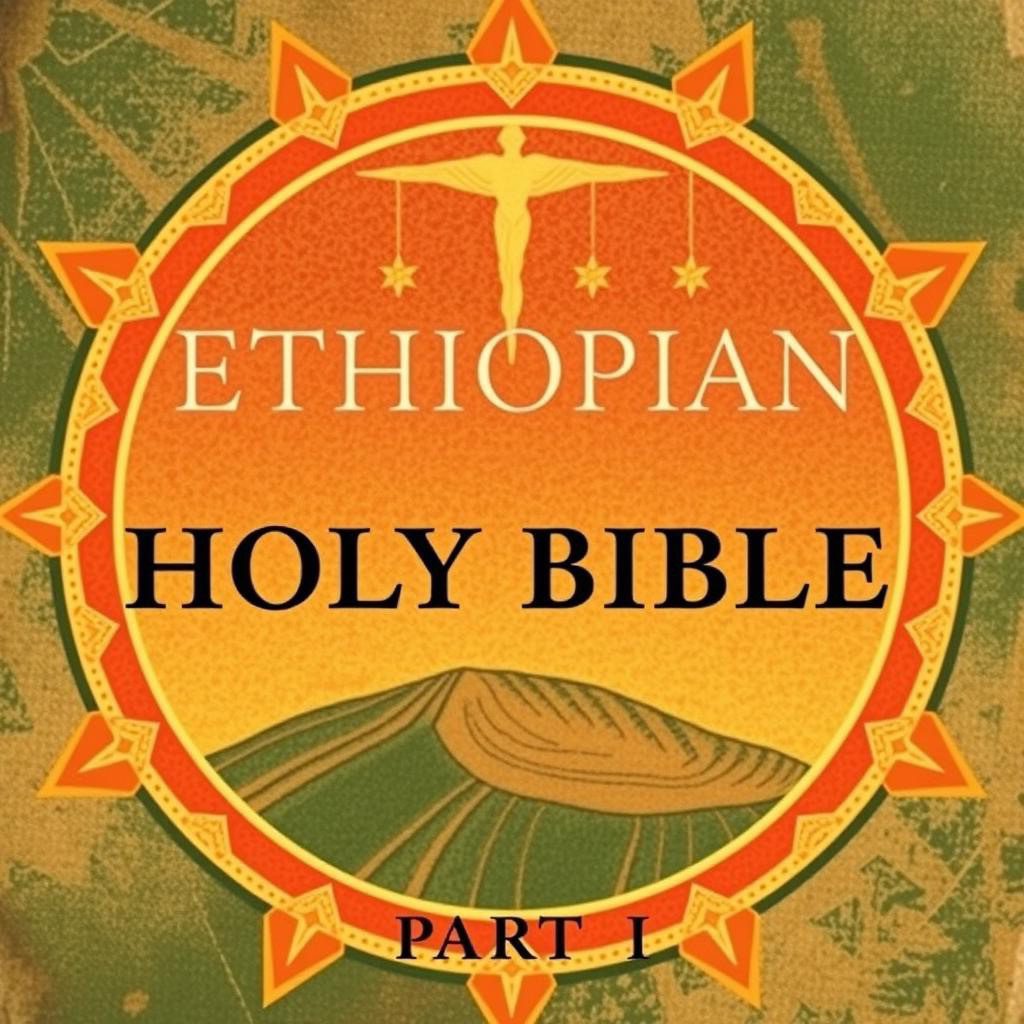
Among the vast landscapes of human spirituality, few texts carry the mystery, antiquity, and divine depth of the Ethiopian Holy Bible. To encounter it is to step beyond the familiar borders of Western Christianity and into a realm where the sacred is older, richer, and deeply interwoven with the soul of an ancient people. The Ethiopian Bible, known in the Ge’ez tongue as the Mäṣḥafä Qəddus, is not merely a collection of religious writings—it is a living, breathing testament to a faith that has endured for millennia, preserved in the mountains and monasteries of a land once called Abyssinia. It holds within its pages not only the standard canon of the Scriptures but entire worlds of wisdom omitted from most Western traditions—books of prophecy, visions, and mystic law that open windows into forgotten epochs of divine revelation.
To understand the Ethiopian Bible is to understand Ethiopia itself—a land steeped in legend, whose lineage claims descent from King Solomon and the Queen of Sheba. The sacred text of Ethiopia did not arrive through conquest or translation, but through ancient inheritance. According to Ethiopian tradition, the Ark of the Covenant was brought from Jerusalem to Axum by Menelik I, the son of Solomon and Sheba, marking the moment when divine law found a new home upon the African plateau. There, it is said, the Ark remains to this day, guarded by monks in silence. The Ethiopian Bible became, in this mythic continuity, not merely a reflection of the Hebrew and Christian scriptures, but the continuation of their living light—a direct descendant of the original covenant between Heaven and Earth. It is no wonder that many scholars and mystics alike regard Ethiopia as a cradle of unbroken biblical heritage, untouched by the later councils that trimmed and revised the Western canon.

Buy now on Amazon
The Ethiopian Orthodox Tewahedo Church, which preserves this sacred inheritance, holds a biblical canon unlike any other. Where most Christian Bibles contain 66 books, the Ethiopian canon contains as many as 81—and in certain versions, even more. Within it rest not only the familiar works of Genesis, Exodus, and the Gospels, but also The Book of Enoch, The Jubilees, The Book of the Shepherd, The Apocalypse of Peter, and many others lost to the Western world. These are not curiosities or apocrypha to the Ethiopian faithful—they are pillars of divine knowledge. The Book of Enoch, for example, a visionary text that describes the descent of angels and the origins of cosmic order, survived nowhere else in its entirety except through Ethiopian preservation. While the West dismissed it as heresy, Ethiopia held it as sacred prophecy, a reminder that humanity’s story began long before Eden and extends far beyond our fallen understanding.
Each manuscript of the Ethiopian Bible is itself a masterpiece of devotion. Written in Ge’ez—the ancient liturgical language of Ethiopia—on vellum parchment by monks whose lives are devoted to transcription, these volumes are illuminated with images of saints, angels, and cosmic symbols rendered in the vibrant earth tones of the Ethiopian highlands. The letters of Ge’ez, rounded and flowing like rivers of light, are said to hold numerical and mystical properties; each word resonates with a frequency of prayer, each phrase sung in chant-like intonation during the sacred liturgies that can last for hours or even days. The smell of frankincense and myrrh fills the monasteries as the scriptures are read, and the boundaries between heaven and earth seem to blur. To hear the Ge’ez Bible recited is to hear the voice of a faith that has not forgotten its origins, a tongue that carried the flame of divine truth when empires rose and fell around it.
But what truly sets the Ethiopian Holy Bible apart is not merely its age or its breadth—it is its continuity. Ethiopia was never colonized in the way other nations were, and its Church never submitted to the authority of Rome or Constantinople. Its canon, its language, and its interpretations have remained largely unaltered since the earliest centuries of Christianity. It stands as a living time capsule of the world’s oldest Christian tradition—one that still celebrates the Sabbath alongside Sunday, honors ancient dietary codes, and intertwines Old and New Testament rituals in a seamless tapestry. In the Ethiopian tradition, the covenant between God and humanity was never replaced but fulfilled through Christ, who is understood as the unifying force between heaven and earth, spirit and flesh, law and grace. The very word Tewahedo means “unity”—a sacred oneness that reflects both the divine and the human nature of Christ and the inseparable harmony of all creation.

Buy now on Amazon
In this first part of our exploration, we have merely opened the gates to the vast spiritual citadel that is the Ethiopian Bible. Its roots run deep into the soil of ancient Israel, yet its branches stretch across Africa and into the heart of all mystic faiths. It is not only a religious document but a cosmic archive—preserving stories, prophecies, and symbols that reveal a forgotten dimension of divine reality. In Part II, we will journey deeper into its hidden books: the visions of Enoch, the sacred histories of Jubilees, and the mystical parables that shaped Ethiopian theology and art. We will witness how this sacred text preserved the esoteric heart of Abrahamic wisdom and how its message continues to awaken seekers in our modern age.
For now, remember this: the Ethiopian Bible is not merely the oldest version of the Word—it is, in many ways, the purest, untouched by the sword of revision, unbroken by the tides of empire. It is the light that flickered in the darkness, and the darkness could not comprehend it.

Buy now on Amazon
Leave a Reply