
Some of the herbal allies mentioned here are shared through affiliate links, meaning I may receive a small blessing of support if you choose to journey with them—always at no extra cost to you.

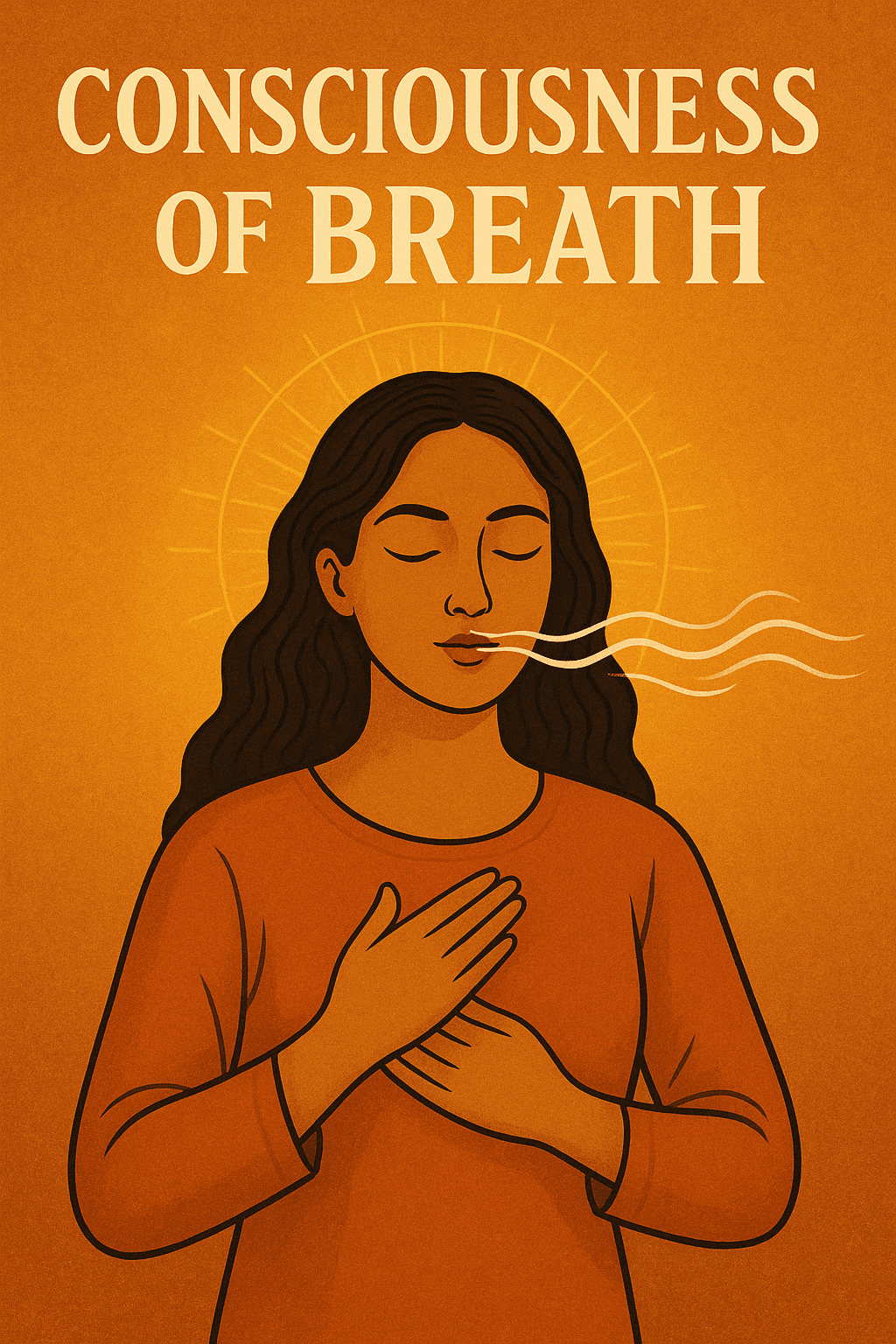
In a world that moves faster than ever before, humanity finds itself paradoxically more disconnected—from nature, from one another, and most importantly, from the rhythm of life itself. That rhythm is the breath. We take over twenty thousand breaths each day, yet most people do so unconsciously, unaware of its power, rhythm, or influence. Breath is the bridge between body and spirit, a constant dialogue between the physical and the subtle. Becoming conscious of one’s breath is perhaps the simplest and most profound form of meditation, offering a return to presence in a world dominated by noise, haste, and distraction. Breathwork—the art and science of harnessing and regulating the breath—has become a vital practice in restoring balance to modern life.
The Forgotten Art of Breathing
For thousands of years, sages, yogis, and mystics understood that the breath was not merely an automatic function but a sacred current of life force—prana, chi, or ruach. In these traditions, controlling and refining one’s breath was the foundation of health, focus, and spiritual evolution. Yet in our current age, shallow breathing has become the norm, a byproduct of chronic stress, anxiety, and sedentary living. The result is a collective disconnection from vitality itself. Conscious breathing restores this connection. It slows the racing mind, calms the nervous system, and awakens awareness of the present moment. When one breathes with intention, the veil between body and consciousness thins, revealing the innate harmony that has always been there.
Breathwork as a Healing Practice
Breathwork is not simply about taking deep breaths—it is about transforming energy. When you consciously breathe, you alter the chemistry of your blood, increase oxygen supply to your brain and cells, and stimulate your parasympathetic nervous system, which governs relaxation and recovery. Breathwork becomes a form of inner alchemy, transmuting tension, fear, and stagnation into clarity, openness, and flow. Many practitioners describe the experience as a kind of emotional detox, releasing old traumas and subconscious patterns stored in the body. Through rhythmic and intentional breathing, suppressed emotions can rise to the surface to be witnessed and released, leading to profound emotional and psychological healing.

The Seven Benefits of Conscious Breathing
Reduces Stress and Anxiety: Deep, slow breathing activates the vagus nerve, which calms the body and reduces cortisol levels. Over time, this reconditions your stress response, allowing you to navigate challenges with greater ease and clarity. Improves Focus and Mental Clarity: Oxygen is the fuel of the brain. Conscious breathing increases oxygen flow, heightening alertness, improving cognitive performance, and clearing the fog of overthinking. Balances the Nervous System: Regular breathwork harmonizes the sympathetic (fight-or-flight) and parasympathetic (rest-and-digest) systems, fostering emotional equilibrium and resilience. Enhances Emotional Intelligence: Through breath awareness, you become more attuned to your inner states. Breath gives space between stimulus and response, allowing emotions to be felt consciously rather than acted out unconsciously. Boosts Energy and Vitality: Proper oxygenation revitalizes cells and supports the mitochondria—the body’s energy producers—leading to a natural increase in stamina, endurance, and motivation. Supports Physical Healing: Oxygen-rich blood promotes cellular repair, improves immune function, and enhances circulation. Breathwork is a complementary tool in recovery and disease prevention. Deepens Spiritual Awareness: As you slow your breath, the mind becomes still. In that stillness, consciousness expands, and you may begin to perceive the subtle currents of life energy that animate all things.
Breathwork as Meditation
Breath is the most accessible form of meditation because it is always available, always flowing, and always here. By anchoring attention to the inhale and exhale, the mind begins to settle naturally. Over time, one realizes that the breath itself is a teacher—a constant reminder of impermanence and renewal. Each breath is a birth and a death: the inhale receives life; the exhale releases it. Through this rhythmic awareness, the practitioner discovers that peace is not something to be achieved, but something that emerges when the mind surrenders to the simplicity of being.
Meditation on the breath also cultivates mindfulness in daily life. When you become aware of your breathing throughout the day, you begin to notice how it changes with your emotions, your thoughts, and your environment. You learn to use the breath as a compass—a way to navigate back to center whenever life’s storms arise. This is the essence of living consciously: not to escape the world, but to engage with it from a place of inner stillness and strength.

Breath and the Modern Mind
In an age of overstimulation, breathwork is a medicine for the mind. Technology and constant connectivity have fragmented attention, creating an epidemic of mental exhaustion. Conscious breathing interrupts this pattern, grounding awareness in the body. Even a few minutes of mindful breathing each day can dramatically shift one’s state—from reactive to responsive, from chaotic to centered. As science continues to validate ancient wisdom, modern psychology now recognizes breathwork as a therapeutic tool for trauma release, anxiety disorders, and depression. What ancient mystics knew intuitively is now being rediscovered: that the breath is a bridge between the conscious and subconscious mind, capable of reprogramming deeply rooted patterns of thought and behavior.
A Return to Sacred Rhythm
When you begin to live with awareness of breath, you rediscover the sacred rhythm of existence. You realize that breath is not merely air entering the lungs—it is life itself moving through you. The same breath that animates you animates all beings. It connects you to the trees, the oceans, and the great cosmic dance of creation. To breathe consciously is to participate in that dance, to move in harmony with the pulse of the universe.
In the end, the consciousness of breath is the consciousness of life. It is the most intimate and universal form of prayer—one that requires no words, no beliefs, no dogma. Just presence. Just awareness. In a world hungry for healing, peace, and connection, returning to the breath may be the simplest and most profound act of remembrance we can make.

Leave a Reply